2026 Best Humanoid Robot Manufacturers Worldwide?
The 2026 humanoid robot market is moving from impressive demonstrations toward measurable industrial value. Manufacturers now compete on walking stability, manipulation accuracy, battery endurance, safety systems, and production scale. A robot that waves convincingly may still fail beside a moving conveyor. That difference matters.
Rodney Brooks, a respected robotics researcher and iRobot co-founder, once said, “The robots of the future will be a lot more like animals than they are like humans.” His observation remains useful when evaluating each Humanoid Robot manufacturer. Human-like bodies attract attention, but practical machines must also balance, recover from errors, and handle ordinary objects. A loose cable. A metal component. A narrow factory aisle.
This guide examines leading manufacturers worldwide, including established technology companies and ambitious emerging firms. It considers engineering experience, commercial partnerships, manufacturing capacity, software development, and real-world deployment evidence. Public demonstrations are included, but they are not treated as final proof. Some claims remain difficult to verify. Some timelines may slip. That is normal in a young industry, yet it deserves careful attention.
The strongest companies may not be those with the most dramatic videos. They may be the firms that document failures, improve reliability, and support customers after installation. Costs also matter. So do repair networks, training requirements, data practices, and workplace integration. A polished prototype is only one piece of the picture.
Readers should treat this ranking as a practical market review, not a permanent verdict. The industry can change quickly. New funding, technical breakthroughs, or failed deployments may reshape the list before 2026 ends.
Humanoid Robots in 2026: Definition, Anatomy, and Core Specifications
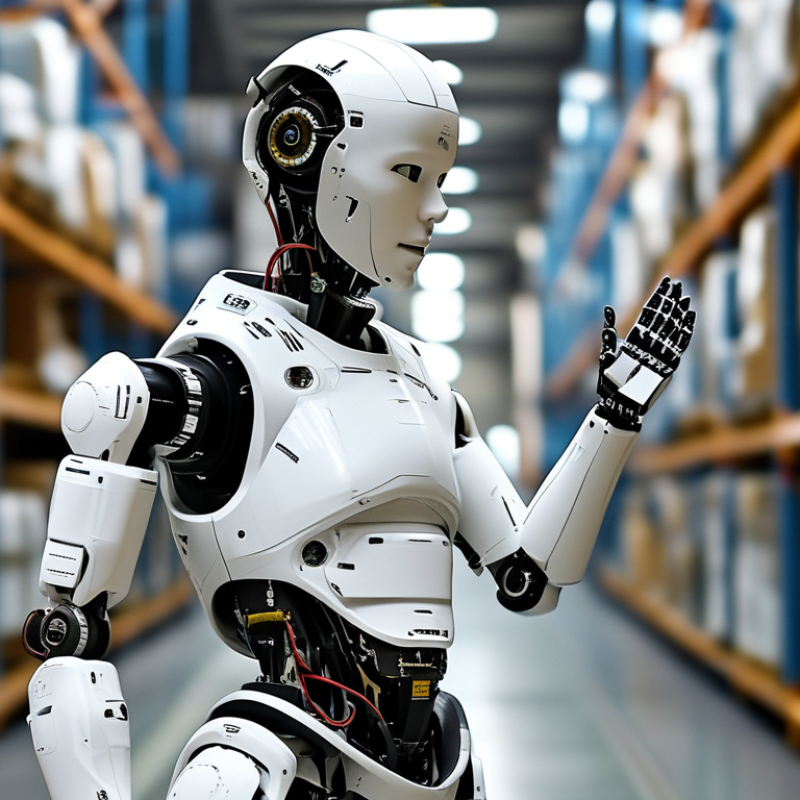
In 2026, a humanoid robot is more than a machine with two legs. It is a mobile system designed to sense, decide, and act in spaces built for people. A practical model usually includes a head-mounted vision unit, articulated arms, a torso computer, battery modules, and two-foot locomotion. Hands may use electric motors, tendon drives, or compact hydraulic systems. Each choice affects weight, noise, serviceability, and safety. The definition remains slightly imperfect. Some machines resemble humans but lack useful manipulation.
Core specifications should be read as working evidence, not marketing decoration. Measure walking speed on uneven flooring, not only in a clean laboratory. Check payload at full arm extension, joint torque, turning radius, battery runtime, charging time, and emergency stopping distance. Vision may combine cameras, depth sensors, force sensing, and microphones. Compute hardware must manage perception and motion with low delay. A reliable evaluation also records falls, recovery attempts, heat buildup, and performance after repeated cycles. Those details often reveal more than a peak speed figure. In field trials, small calibration errors can make a polished demonstration look better than daily operation.
Tips: Ask for test conditions and maintenance records. Request payload curves, not one maximum number. Watch the robot grip a soft object and place it gently. Test stairs, narrow aisles, reflective floors, and poor lighting. Confirm operator training, software update procedures, spare-part access, and data handling practices. Keep expectations practical. Human-shaped does not mean human-level.
Global Market Forecasts: Goldman Sachs Projects a $38B Market by 2035
2026 Best Humanoid Robot Manufacturers Worldwide?
A leading financial research forecast projects the humanoid robot market could reach $38 billion by 2035. That estimate reflects rising investment, factory automation, and labor shortages. It does not guarantee rapid adoption. Manufacturing costs remain high, and reliable performance still requires extensive testing.
The strongest manufacturers will combine mechanical engineering, artificial intelligence, battery systems, and safety controls. Their robots may move boxes, inspect shelves, or support workers in repetitive environments. Picture a warehouse robot lifting a 15-kilogram container beside human staff. Its hands must grip securely, while its software must stop instantly near people.
Factory trials already reveal practical limits. A robot can walk across a smooth floor, yet struggle with cables, rain, or uneven surfaces. This matters more than impressive demonstrations.
Buyers will examine uptime, repair access, data protection, and training costs before signing large contracts.
Some forecasts may overestimate demand because pilot projects often receive unusual support. Real progress will depend on affordable production and measurable workplace value.
Manufacturers also face difficult questions about responsibility and workforce transition. Human oversight should remain central during early deployment. Clear maintenance records and independent safety assessments can strengthen trust.
The companies that survive this market may not build the fastest machines. They may build the most dependable ones.
2026 Manufacturer Profiles: Tesla, Figure AI, Agility Robotics, and UBTECH
The 2026 humanoid market is moving from demonstrations toward controlled workplace trials. Goldman Sachs Research projects a humanoid robotics market near 38 billion dollars by 2035. Its forecast also indicates sharply rising annual shipments during the next decade. These figures are promising, but they are not guaranteed. Battery life, hand dexterity, safety certification, and maintenance costs remain difficult tests.
An electric-vehicle manufacturer is developing a general-purpose humanoid for factory work. Its advantage is manufacturing scale, battery expertise, and access to industrial production lines. A venture-backed American developer focuses on manipulation tasks, including lifting boxes and operating tools. Recorded demonstrations show progress, yet repeatable performance across changing workplaces still requires stronger evidence.
A warehouse-robotics specialist offers a bipedal system designed for logistics environments. Its testing emphasizes walking, tote handling, and integration with warehouse workflows. A Chinese service-robotics group is building humanoids for factories, education, and commercial settings. The company benefits from regional supply chains and large manufacturing demand. However, broad application claims can exceed verified deployment data. The International Federation of Robotics reported 541,302 industrial robot installations worldwide in 2023, showing the scale of automation competition. Humanoids must prove they can match that ecosystem’s reliability, not merely attract attention. Evidence matters more than polished video.
Performance Benchmarks: Degrees of Freedom, Payload, Speed, and Uptime
2026 Best Humanoid Robot Manufacturers Worldwide?
The strongest humanoid robot manufacturers should publish measured results, not polished demonstration footage. Degrees of freedom reveal joint flexibility, but a higher count does not guarantee better work. A practical system may use 30 to 50 controlled joints for walking, grasping, and balance. Each joint still needs accurate sensing and reliable control.
Payload testing must show the load, reach distance, motion speed, and floor condition. A robot lifting 15 kilograms near its body differs greatly from one holding 10 kilograms with an extended arm. Walking speed should be measured in meters per second, both empty and loaded. Uptime also needs a clear definition. Ten hours of operation with frequent resets is not the same as ten hours of supervised production.
Tips:
Ask for logged test data, maintenance intervals, and failure rates. Check whether uptime includes charging, calibration, and software recovery. Request a repeatable demonstration at your facility. No benchmark is perfect. Dust, lighting, uneven floors, and operator habits can change results. A robot that performs well in a laboratory may hesitate beside a crowded workbench. From field trials, recovery behavior often matters more than peak speed. That detail is easy to overlook. Manufacturers should report near-misses, paused tasks, and failed grasps, not only successful cycles. Honest limitations make performance claims more useful.