2026 Top Bath Towel Making Machine Types
Choosing the right Bath Towel Making Machine in 2026 requires more than comparing speed and price. Manufacturers must match equipment with towel size, fabric weight, production volume, and finishing requirements. A hotel supplier may need high-speed terry towel weaving equipment. A boutique brand may prefer flexible jacquard or embroidery systems. The best choice depends on actual orders, not attractive brochures.
This guide examines the leading machine types used across modern towel production lines. It covers terry towel looms, jacquard towel machines, towel cutting machines, hemming and stitching equipment, embroidery machines, and integrated finishing systems. Each type serves a different production stage. Some machines create dense, absorbent loops. Others improve edge strength, branding, folding, or packaging consistency. Small details matter, such as stable yarn tension, adjustable fabric width, and easy access for cleaning.
Performance claims still need careful checking. A faster machine is not always the most productive option. Downtime, operator training, spare parts, and energy use can change the final cost. That assumption deserves testing. Buyers should request sample production, maintenance records, and clear warranty terms before investing. Safety guards and reliable control systems also support responsible factory operation.
This overview uses practical production factors rather than exaggerated promises. It also recognizes an uncomfortable truth: no single machine fits every towel manufacturer. Some specifications may appear impressive but fail under continuous operation. Careful comparison remains essential. By understanding the strengths and limits of each Bath Towel Making Machine type, producers can build a more reliable, efficient, and commercially suitable production line for 2026.
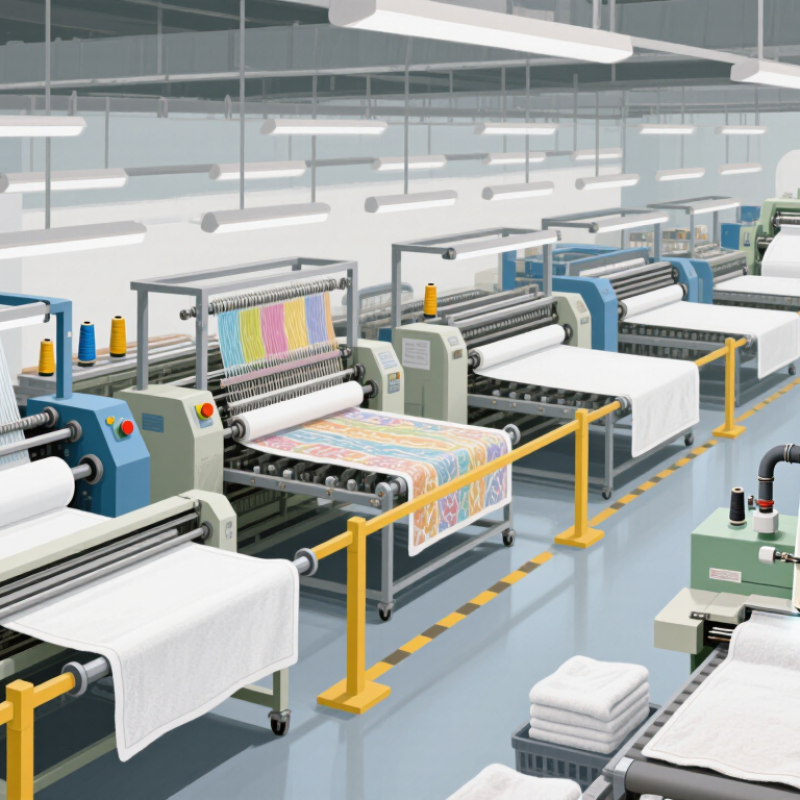
Bath Towel Machine Fundamentals: GSM, Width, and Production Capacity
Choosing a bath towel making machine in 2026 starts with fabric fundamentals, not a glossy output figure. GSM means grams per square meter. It controls absorbency, drying time, yarn use, and handling feel. A 500 GSM towel feels plush, while a 350 GSM towel dries faster. In practical trials, the same cotton blend can produce different results after washing. That detail is easy to miss.
Terry weaving machines, including rapier and air-jet designs, must match the required towel width. A 2.8-meter machine may weave several narrow towels side by side, reducing cutting waste. Wider equipment suits oversized bath towels, but it needs stable yarn tension. Check usable width, not only the advertised frame width. Allow space for selvedges, shrinkage, and edge trimming. Small calculations matter.
Production capacity is usually stated in meters per hour or kilograms per day. Neither figure is complete without GSM, pile height, speed, downtime, and changeover time. A machine running quickly may lose efficiency when colors or patterns change. Track actual output over a full shift. I prefer records from three shifts, though even that sample can mislead. Humidity, maintenance skill, and operator settings also affect results. Compare fabric weight, loop quality, width accuracy, and waste beside the promised figures.
Yarn Preparation Machines: Warping, Sizing, and 400–800 RPM Performance
Bath towel quality begins before weaving, with stable yarn preparation. Warping aligns thousands of ends onto a beam, while sizing coats yarns with a controlled protective film. On a production floor, operators commonly evaluate 400–800 rpm as a practical speed window, but the correct setting depends on yarn count, tension, beam width, and package build. Speed alone is misleading.
The Textile Exchange Materials Market Report 2024 recorded 124 million tonnes of global fiber production in 2023, with polyester representing about 59%. It also reported that recycled polyester accounted for roughly 12% of polyester output. These material shifts matter. Recycled yarn may show different hairiness, friction, and moisture behavior during sizing. ITMF’s 2024 International Textile Machinery Shipment Statistics also separates machinery categories, reminding engineers that one speed figure cannot describe every preparation system.
At 400–800 rpm, a warper needs responsive tension control and accurate stop motion. A small tension spike can create loose ends, streaks, or weak towel selvedges. Sizing machines need balanced drying, not simply faster rollers. Excess heat can stiffen yarn and reduce softness. Too little size may increase abrasion during weaving.
Calibration still matters.
Not every loom agrees.
Our practical weakness is treating rpm as productivity alone. A better check combines end-break rate, moisture regain, size add-on, and beam density. Operators should record these values by yarn lot, then adjust gradually rather than trusting a fixed factory setting.
Towel Finishing Machines: Shearing, Washing, Dyeing, and 20–80 m/min Lines
2026 Top Bath Towel Making Machine Types
Towel finishing machines shape softness, absorbency, and surface appearance after weaving. A shearing machine trims uneven loops and creates a cleaner pile height. Operators should check blade sharpness, fabric tension, and dust removal during every shift. Small tension errors can leave visible bands across the towel.
Washing equipment removes loose fibers, processing residue, and excess dye. Dyeing machines then control color penetration through temperature, liquor ratio, and fabric movement. Modern finishing lines commonly run from 20 to 80 m/min, depending on towel weight and process stability. Higher speed is not always better. Heavy bath towels may need slower movement for even washing and reliable shade matching.
Tips: Test a short fabric length before full production. Record speed, temperature, moisture, and color results. Inspect edges under strong light. A technician’s experience matters, but written records prevent repeated mistakes. I have found that rushed adjustments often create more waste than they save. Leave room for correction. The ideal setting may change with yarn type, loop height, and towel size.
The chart shows representative operating-speed ranges for continuous towel-processing equipment. Shearing and washing commonly operate at moderate speeds, while integrated finishing lines can reach higher speeds. Dyeing values refer to continuous dyeing equipment; batch dyeing is measured by cycle time rather than meters per minute. Actual performance depends on towel weight, pile height, moisture content, fabric width, and finishing quality requirements.
2026 Selection Criteria: Automation, Energy Efficiency, Output, and ROI
2026 Top Bath Towel Making Machine Types
For 2026, bath towel producers should compare automation, energy use, output, and return on investment together. A fast loom is not automatically a profitable loom.
ITMF’s International Textile Machinery Shipment Statistics 2024 shows continuing investment in modern textile equipment. This reflects a practical shift toward higher productivity and better process control. Look for automatic yarn handling, programmable density settings, fabric inspection, and rapid changeover functions. These features reduce manual adjustments and production errors. However, excessive automation can increase maintenance skill requirements. That risk is often underestimated.
Energy efficiency deserves measurable attention. The International Energy Agency’s Energy Efficiency 2024 report confirms that efficiency remains a major industrial investment priority. Request electricity consumption per kilogram of finished towel, not only motor ratings. A machine using efficient drives, heat recovery, and standby controls can reduce operating costs. The U.S. Department of Energy notes that compressed-air leaks may waste 20–30% of compressor output. Check pneumatic systems carefully.
Output figures need factory evidence. Ask for tested production rates using similar cotton yarn, towel weight, and design density. Calculate ROI from saleable towels, labor savings, energy costs, maintenance, and downtime. A lower purchase price may look attractive. It may fail later. Include spare-part availability and operator training in the calculation. My practical concern is simple: projected ROI often assumes perfect utilization, which rarely happens.