
Skip to Content
chevron-left chevron-right chevron-up chevron-right chevron-left arrow-back star phone quote checkbox-checked search wrench info shield play connection mobile coin-dollar spoon-knife ticket pushpin location gift fire feed bubbles home heart calendar price-tag credit-card clock envelop facebook instagram twitter youtube pinterest yelp google reddit linkedin envelope bbb pinterest homeadvisor angies

China Best HDPE Floater Manufacturer and Supplier?

Choosing the China Best HDPE Floater Manufacturer and Supplier? requires more than comparing prices or colorful product photographs. A dependable Hdpe Floater should combine stable buoyancy, impact resistance, UV protection, and accurate rotational molding. Its performance matters in marinas, aquaculture farms, floating walkways, and offshore work areas. Small defects can become expensive problems.

Marine polymer engineer Dr. Elena Marquez says, “A float is trusted only when its material, structure, and testing support the same promise.” Her point is practical. Buyers should examine resin quality, wall thickness, foam filling, welding details, load capacity, and drainage design. Ask whether the manufacturer uses virgin HDPE and tested UV stabilizers. Request production samples, inspection records, and installation references. Good suppliers explain these details clearly.

Look beyond the catalogue.

An experienced Chinese manufacturer should provide customized dimensions, reliable molds, consistent color, and responsive technical support. It should also understand shipping protection, replacement parts, and project-specific buoyancy calculations. However, no supplier is perfect. Published specifications may not reflect harsh tides, repeated impacts, or long exposure to sunlight. That is where careful verification becomes essential.

This guide evaluates leading HDPE floater manufacturers and suppliers through material expertise, production experience, quality controls, customization ability, and customer support. It also considers an uncomfortable issue: the lowest quotation may hide weaker resin, thinner walls, or limited after-sales service. A trustworthy partner welcomes difficult questions and supports claims with measurable evidence. Your final decision should balance cost, service life, safety margins, and documented performance.
China Best HDPE Floater Manufacturer and Supplier?

HDPE Floaters: Definition, Structure, and Core Materials

HDPE Floaters: Definition, Structure, and Core Materials

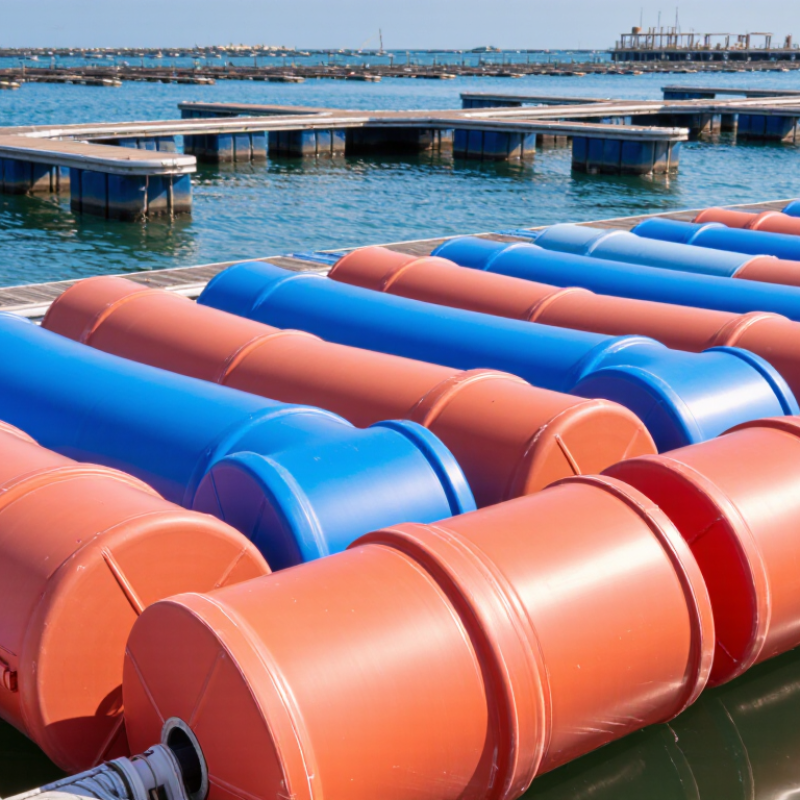
HDPE floaters are buoyant modules used to support floating platforms, walkways, pipes, and marine equipment. HDPE means high-density polyethylene, a tough plastic with low water absorption and good impact resistance. Unlike rigid metal floats, HDPE modules can tolerate repeated contact with water and moderate movement. They are not indestructible.

A typical floater has a hollow, sealed body formed by rotational molding. This process creates a consistent shell without many weak joints. The outer wall provides protection, while trapped air creates buoyancy. Some designs include closed-cell foam for added safety if the shell is damaged. Internal ribs may improve stiffness. Connection points, bolts, and hinges are usually made from corrosion-resistant metal. Their quality strongly affects the platform’s service life.

The core material should include UV stabilizers, especially for strong sunlight. Proper material selection also requires checking density, wall thickness, weld quality, and load distribution. During practical inspections, I would examine corners first because stress often gathers there. A floater may pass a basic buoyancy test yet perform poorly under waves or uneven loading. That is an important limitation. Reliable suppliers should provide material data, dimensional checks, and load-testing records. They should also explain how temperature, saltwater, and long-term exposure affect performance. A simple design is not always a weak design. Poorly checked details are the real concern.

Key Features and Performance Standards of HDPE Floaters

China’s best HDPE floater manufacturer should prove performance, not only provide attractive samples. HDPE typically has a density near 0.94–0.97 g/cm³, according to technical data summarized by PlasticsEurope. Its low density supports strong reserve buoyancy when wall thickness and internal ribs are properly designed.

Key checks include tensile strength, impact resistance, flexural behavior, and environmental stress cracking. ASTM D638 can verify tensile properties, while ASTM D790 evaluates flexural performance. ASTM D1693 is useful for stress-cracking resistance. For outdoor service, ISO 4892-3 accelerated weathering tests can expose weak UV protection. A reliable supplier should provide test dates, specimen dimensions, and failure results. Generic certificates are not enough.

Manufacturing details matter. Rotational molding should produce uniform walls, rounded corners, and sealed inspection points. Fusion seams need visual inspection and leak testing. PlasticsEurope reported 400.3 million tonnes of global plastics production in 2022, showing a mature material supply chain, not guaranteed floater quality. That distinction is easy to miss. Engineers should calculate buoyancy from displaced water volume, floater weight, cargo load, wave action, and a project-specific safety margin. Saltwater, sunlight, algae, and repeated impacts can change field performance. A supplier who shares poor test results deserves more trust than one offering perfect claims. Erotiske

Common Applications Across Marine and Aquaculture Industries

HDPE floaters support common marine and aquaculture operations, from fish cages to floating walkways. Their buoyancy keeps platforms stable around nets, pipes, feeders, and inspection areas. The FAO’s The State of World Fisheries and Aquaculture 2024 reports 94.4 million tonnes of aquatic animals produced through aquaculture in 2022. This scale increases demand for dependable floating infrastructure. HDPE is widely selected because it resists seawater, moisture, and many routine chemicals. It also tolerates repeated contact with ropes and cage frames. Still, material choice alone cannot prevent failure.

On working farms, floaters face waves, ultraviolet exposure, biofouling, and uneven loading. A practical design should include sealed chambers, secure connections, visible load ratings, and accessible inspection points. The OECD-FAO Agricultural Outlook 2023-2032 projects aquaculture will supply 55% of global fish production for human consumption by 2032. That projection makes serviceability more important, not merely initial price. Operators should check weld quality, wall thickness, anchoring, and drainage after harsh weather. Small defects matter. A cracked fitting can shift an entire walkway. No floater is maintenance-free. This is where many specifications remain too optimistic. Reliable suppliers should provide test records, dimensional tolerances, load guidance, and realistic replacement advice, while adapting designs to local tides, stocking density, and working habits.

How to Evaluate an HDPE Floater Manufacturer and Supplier

China Best HDPE Floater Manufacturer and Supplier?

How to Evaluate an HDPE Floater Manufacturer and Supplier

Choosing an HDPE floater supplier requires more than comparing prices. Examine the manufacturer’s practical experience with floating platforms, pontoons, and marine environments. Ask how long the production team has worked with HDPE materials. Request project photos, technical drawings, and contactable customer references. A polished brochure proves little.

Check the material carefully. Reliable suppliers should explain resin grades, UV resistance, wall thickness, buoyancy, and load limits. They should provide test reports or material certificates. Inspect welding quality, molded edges, connection holes, and surface finish. Small cracks matter. Ask whether each batch receives dimensional and leakage inspections. Clear records show stronger process control.

Factory communication also reveals professional reliability. Can engineers answer technical questions without vague promises? Do they confirm wave conditions, water depth, temperature, and expected loads before quoting? A capable supplier should offer drawings, installation guidance, spare-part advice, and realistic production times. Verify packaging and export experience as well. I would not select the cheapest option automatically. Low pricing may hide thinner walls or weaker connectors. Still, expensive does not always mean better. Request samples when possible, compare measurable specifications, and record every agreed detail in the contract. Even careful evaluation can miss a problem, so independent inspection remains worthwhile.

Manufacturing Process, Quality Control, and Customization Options

China Best HDPE Floater Manufacturer and Supplier?

A capable HDPE floater manufacturer controls quality from resin selection to final packing. Virgin or approved recycled HDPE should match the project’s buoyancy and impact requirements. Operators monitor melt temperature, molding pressure, cooling time, and wall thickness. Small process changes can create weak corners or uneven flotation.

During factory inspections, ask for material certificates, dimensional records, and batch traceability. Each floater should receive visual checks and practical buoyancy testing. Inspectors can look for cracks, sink marks, poor welds, and unstable seams. Samples should remain afloat under the specified load. Better testing includes water exposure and repeated impact checks. No production line is perfect. That is why clear corrective records matter.

Customization may cover length, diameter, color, connector spacing, logo-free identification marks, and internal reinforcement. Engineers should review tidal movement, wave height, water temperature, and installation loads before changing the mold. A practical supplier provides drawings for approval and confirms tolerances in writing. Packaging also matters; wrapped units need protection from sharp edges and prolonged sunlight during transport. I have seen attractive samples fail because the connector holes were slightly misaligned. That detail deserves attention. Reliable communication, documented inspections, and realistic lead times separate a qualified supplier from a merely inexpensive one.

Article Source: