
Top 10 Garage Door Maintenance Tips Every Buyer Should Know
Garage doors rarely announce trouble politely. A rough scrape, a slow lift, or a remote that works only nearby can signal wear before a breakdown. For buyers, these small clues matter: a neglected door can disrupt daily routines and may require repairs soon after moving in. The good news is that sensible garage door maintenance often starts with simple observation, not specialized tools.
This guide presents ten practical checks to help buyers understand what to inspect and what to leave to a trained technician. Look at rollers, tracks, hinges, weather seals, and the opener’s response. Listen for grinding or uneven movement. Test the door’s balance and safety features only as directed by the manufacturer; springs and cables remain under high tension. Do not adjust them yourself. A clear maintenance history is useful, but it cannot prove every component is sound. That part deserves a closer look.
Some tasks take minutes. Others need expertise. Keep the area around the tracks clear, wipe away visible dirt, and note changes instead of guessing at their cause. Maintenance advice can make the job seem neat and predictable. Real doors are not always neat, and one symptom can have several causes. If the door drops, jams, or behaves unpredictably, stop using it and arrange a professional inspection. These tips help buyers ask better questions, spot warning signs, and care for a door without taking unnecessary risks.
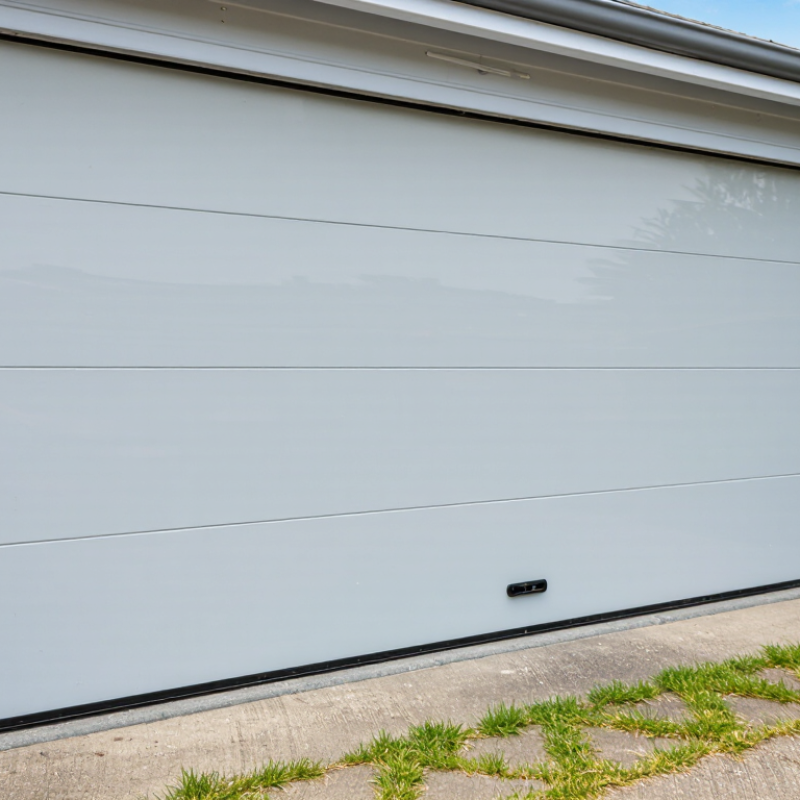
Understand the Garage Door’s Main Parts and Safety Features
A garage door is a moving system, not just a row of panels. The panels travel along metal tracks on small rollers, while springs counterbalance the door’s weight. Cables connect the spring system to the lower corners. The opener moves the door, but it should not carry the door’s full weight. Small parts matter. Look for bent tracks, loose-looking hardware, frayed cables, or rollers that wobble as the door moves.
Safety features deserve equal attention. Photo-eye sensors near the floor should face each other, with their lenses clear of dust and storage bins. If the door has an automatic reverse function, test it as directed in the owner’s manual; never put your hands under a moving door. Many openers also have a manual release for power outages. Learn where it is, but use it only with the door fully closed, unless the manual says otherwise.
A brief visual check each month can reveal changes, such as a new scraping sound or a door that closes unevenly. I have found that small noises are easy to dismiss, especially when the door still works. That can be a mistake. Do not adjust springs or lift cables yourself; they are under high tension. If the door feels unusually heavy, drops quickly, or a safety feature fails, stop using it and arrange a qualified inspection.
Top 10 Garage Door Maintenance Tips Every Buyer Should Know — Understand the Garage Door’s Main Parts and Safety Features
| # | Part or Safety Feature | What to Check or Do | Suggested Timing | Buyer Safety Note |
|---|---|---|---|---|
| 1 | Door panels and hardware | Look for dents, cracks, loose hinges, and missing or loose fasteners. Check that the door moves without rubbing against the frame. | Monthly visual check | Do not operate a door with visibly damaged sections or loose hardware until it has been assessed. |
| 2 | Tracks and rollers | Check for debris, visible bends, or loose track brackets. Wipe dirt from the tracks; lubricate rollers only as directed in the owner’s manual. | Every few months | Do not bend tracks or loosen track brackets. Contact a qualified technician if the door is crooked or rollers are coming out of the track. |
| 3 | Torsion or extension springs | Look from a safe distance for gaps, rust, or other visible damage. Springs counterbalance the door’s weight. | Visual check monthly | Never adjust, remove, or repair springs yourself; they are under high tension. Arrange professional service if damaged. |
| 4 | Lift cables | Visually check for fraying, kinks, or slack in the cables near the sides of the door. | Visual check monthly | Do not touch or attempt to repair a damaged cable. Stop using the door and call a qualified technician. |
| 5 | Hinges and moving hardware | Check for cracked hinges or loose fasteners. Apply a garage-door lubricant to designated hinges and roller bearings if the manual recommends it. | Every few months, or as specified by the manual | Keep lubricant off the tracks and door surfaces unless the manufacturer’s instructions say otherwise. |
| 6 | Door balance | If the owner’s manual describes the procedure, disconnect the opener with the door fully closed and carefully check whether the door stays near halfway when lifted manually. | Periodically, following the manual | If the door feels unusually heavy, will not stay in position, or moves unexpectedly, do not continue the test; reconnect the opener if safe and call a technician. |
| 7 | Photo-eye safety sensors | Keep both sensors clear and aligned, and wipe their lenses gently. With the door open, pass an object through the beam to confirm the closing door does not continue closing. | Monthly | Never use a person, pet, or body part to test the sensors. Do not leave the sensors disconnected or bypassed. |
| 8 | Automatic-reversal system | Follow the opener manual’s test procedure. A common contact-reversal test uses a flat, solid object about 1½ inches (38 mm) high beneath the door; the door should reverse when it contacts it. | Monthly and after opener adjustments | Keep people and pets away during testing. If the door does not reverse as instructed, stop using the opener and arrange service. |
| 9 | Emergency release and controls | Learn how the emergency-release handle works and make sure it is accessible. Check that wall controls and remote controls operate as expected. | Review when moving in; check periodically | Use the release only when the door is fully closed unless the manual gives other instructions; an unbalanced door may move suddenly. |
| 10 | Bottom seal and weatherstripping | Inspect the bottom seal and perimeter weatherstripping for cracks, gaps, or sections that no longer contact the floor or frame. | Seasonally | Replace worn seals with compatible parts. Weatherstripping helps limit drafts and water entry but does not make a garage fully airtight. |
Related Posts
-
Top 10 Garage Door Handyman Services Near Me?
-
Top Handyman to Fix Garage Door Near You?
-
Top 5 Causes of Broken Garage Doors and How to Fix Them to Ensure Safety and Security
-
Top 10 Tips for Finding the Best Garage Door Handyman Near You
-
Why Choosing a Local Garage Door Service is Important for Your Home?
-

Top 5 Tips for Choosing the Best Garage Opener Today?