What is LED Poster Display and How Does It Work?
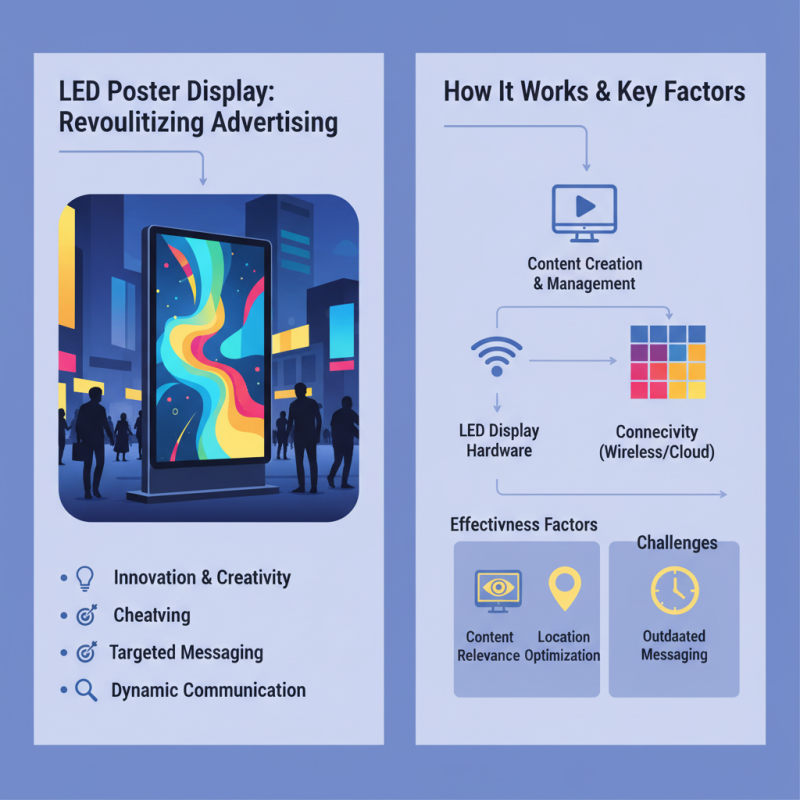
The LED Poster Display has revolutionized visual advertising. It combines technology and creativity seamlessly. These displays are vibrant, attention-grabbing, and versatile. Businesses are increasingly using them for promotions and events.
Imagine walking past a busy street. A bright LED Poster Display catches your eye with colorful animations and messages. It is hard to ignore. This technology allows businesses to communicate dynamically. However, the effectiveness of an LED Poster Display depends on its content and location. Not every display attracts attention; some may fade in the background.
Moreover, maintaining these displays can be challenging. Companies need to keep content fresh and relevant. Outdated messages can lead to disinterest. The true potential of LED Poster Displays lies in constant innovation and creative use. As the market evolves, understanding how they work becomes crucial for effective advertising.
What is an LED Poster Display?
An LED poster display is a modern visual tool that captures attention. It consists of a series of bright, colorful LED panels arranged in a poster format. These displays are becoming popular in various settings, like retail stores, events, and trade shows. They offer dynamic and eye-catching content that traditional posters cannot match.
These displays work by using tiny light-emitting diodes (LEDs) that produce vibrant images and videos. The LED technology allows for high brightness, making them visible even in well-lit environments. Users can easily change the content to suit different occasions or promotions, which makes them versatile. However, it takes effort to create effective visuals. Poorly designed graphics can detract from the message. Additionally, maintaining these displays requires regular updates and technical checks.
LED poster displays can sometimes draw too much focus, which may distract from the product being advertised. The challenge is finding the right balance. While they can be powerful tools for engagement, overuse may lead to viewer fatigue. Striking a harmony between attention-grabbing content and clear messaging is crucial for success.
Key Components of LED Poster Displays
LED poster displays have become popular for advertising and information dissemination. They consist of several key components that make them effective. Understanding these components is crucial for anyone looking to use or design an LED display.
The display panel is the most visible part. It is made up of many tiny LEDs, creating vibrant images and text. These LEDs can emit various colors, which help draw attention. Behind the panel, there is a controller. This device manages the content, ensuring it changes smoothly. Users can update messages easily, allowing for dynamic advertising.
Additionally, power supplies are vital. They provide the necessary energy for the LEDs’ operation. Heat management systems also play a role. Overheating can damage the display, so cooling solutions are essential. Many displays have sensors that monitor temperature and adjust performance. However, not all systems work flawlessly. Users sometimes encounter glitches or failures that require troubleshooting. Recognizing and addressing these challenges is important for maintaining effective displays.
How LED Poster Displays Function: A Detailed Overview
LED poster displays are increasingly popular for advertising and information sharing. They utilize a matrix of small LED lights that can be programmed to show various images and videos. This technology allows for stunning visual presentations. According to recent industry reports, the global LED market is expected to grow at a CAGR of 13.5% through 2025. This growth reflects the rising demand for dynamic advertising solutions.
The functionality of LED poster displays is based on a combination of hardware and software. Each unit contains a controller that processes the content to be displayed. The images are rendered on modules composed of multiple LED lights. These lights produce bright, vibrant colors that catch attention. However, maintaining and updating the content can be a challenge, as regular changes are essential for effectiveness.
The energy efficiency of LED displays stands out. They consume less power compared to traditional displays. Yet, achieving optimal brightness and contrast can sometimes be tricky. Over time, the brightness may degrade, affecting visibility. Current research emphasizes the importance of regular maintenance. This ensures that the displays remain functional and appealing over their lifespan.
Applications of LED Poster Displays in Various Industries
LED poster displays are becoming popular in various industries. Their bright and vivid images attract attention effectively. Retail stores often use them for promotions. A colorful display can highlight deals and new products. They create an immersive shopping experience. However, the energy consumption of these displays can be a concern.
In the entertainment sector, LED posters serve as dynamic billboards. They capture the essence of events, concerts, and films. Often, they convey excitement through rapid visual changes. This can draw audiences in. Yet, the rapid turnover of content can lead to oversaturation. It might diminish the impact over time.
Education also benefits from LED poster displays. Schools use them to share important announcements. Interactive learning environments can engage students more. However, the placement of these displays needs careful consideration. Poor visibility can reduce their effectiveness.
Advantages of Using LED Poster Displays for Advertising
LED poster displays have revolutionized advertising strategies. Their ability to capture attention is unmatched. Studies show that digital signage can increase engagement by up to 150%. Bright, vivid colors and dynamic content attract viewers effectively. The average attention span is only 8 seconds. This short window makes visuals paramount in communication.
One notable advantage of LED poster displays is their flexibility. Advertisers can easily update content in real-time. This adaptability enables campaigns to respond to trends swiftly. Additionally, 80% of consumers recall seeing digital displays within the last month. The high visibility of these displays enhances brand recognition.
Cost efficiency is another critical factor. While the initial investment may be high, the long-term savings are notable. Reduced printing and installation costs make LED displays favorable. Moreover, energy-efficient LED technology lowers operational costs. Businesses can save up to 70% on energy bills with LED systems. Despite these advantages, some still struggle with integration. Proper installation and placement require careful planning.
Advantages of Using LED Poster Displays for Advertising