What Is an Overhead Door Garage Door Opener?
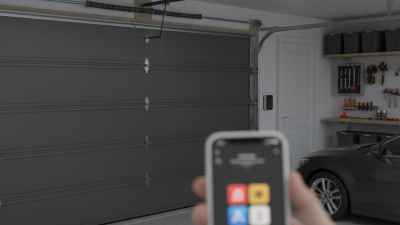
An overhead door garage door opener is the powered unit that moves a sectional or one-piece garage door along its track. It usually includes a motor, drive rail, trolley, and control system. The door’s springs counterbalance much of its weight; the opener guides and moves it. That distinction matters. A struggling motor may signal a door problem, not simply an underpowered opener.
Common designs use a chain, belt, screw drive, or wall-mounted jackshaft. Each brings different trade-offs in noise, maintenance, and installation. Freedonia Group’s U.S. garage-door industry analysis provides market context for these products, while DASMA technical guidance and UL 325 address operator safety. CPSC guidance also emphasizes testing the opener’s reversing function and checking its photoelectric sensors. These are practical checks, not decorative features.
In daily use, the details are easy to notice: a belt drive may sound quieter beside a bedroom, while a blocked sensor can stop the door before it closes. Battery backup can help during an outage, but features vary by model. Read the manufacturer’s manual and confirm that the opener matches the door’s size, balance, and hardware. A smart app is convenient. It is not a substitute for safe installation or regular inspection. I would not treat every “heavy-duty” label as proof of compatibility; the door itself must be assessed.
What an Overhead Door Garage Door Opener Is and How It Works
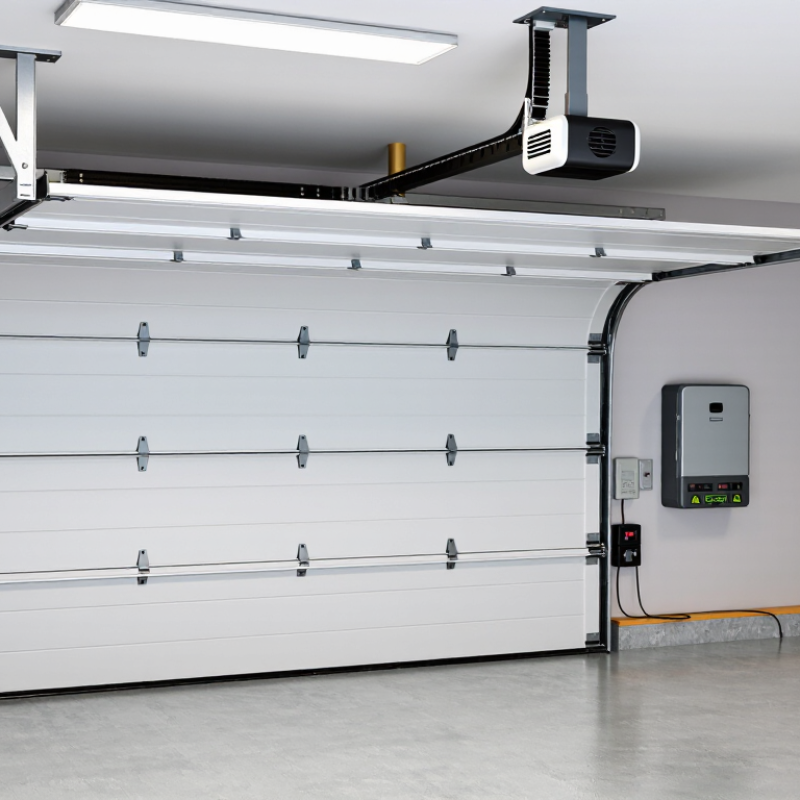
An overhead door garage door opener is an electrically powered operator that moves a sectional door along its tracks. It does not carry the door’s full weight. Torsion or extension springs counterbalance the door; the opener guides its movement. That distinction matters. A door that feels unusually heavy may need attention, not a stronger motor.
In a common setup, the motor turns a chain, belt, or screw drive, moving a trolley along a metal rail. An arm connects the trolley to the door. A control board responds to the wall switch or remote and manages travel limits. The mechanics are simple, but door balance and settings can make operation less predictable. A small detail can matter.
Safety devices help prevent entrapment. The U.S. Consumer Product Safety Commission’s garage-door-opener guidance notes that, since 1993, openers manufactured for sale in the United States have required external entrapment protection. UL 325 also sets safety requirements for these operators. Floor-level photoelectric sensors stop or reverse movement when their beam is interrupted; contact reversal provides another safeguard. Dust on a sensor lens or a misaligned bracket can interrupt the beam. Regular checks help, though they cannot replace qualified service when a door binds, drops, or reverses unexpectedly.
What Is an Overhead Door Garage Door Opener?
An overhead garage door opener is a motorized system that moves a garage door along its tracks. The motor drives a trolley on a rail, and an arm connects the trolley to the door.
Common residential door heights include 7 ft and 8 ft. The opener’s rail and travel settings must match the door; actual dimensions vary by home and installation.
Key Components: Motor, Rail, Trolley, Controls, and Safety Sensors
What Is an Overhead Door Garage Door Opener?
An overhead door opener is a powered system that moves a garage door along its tracks. The motor turns a drive mechanism, pulling a trolley along the rail. The trolley connects to the door arm and carries the door through its opening cycle. You can hear the rail vibrate slightly as the trolley passes. That sound may signal loose hardware, but it is not a diagnosis.
Controls tell the motor when to start, stop, or reverse. Wall buttons and remote controls send commands; the opener’s limits determine how far the door travels. Safety sensors sit near the floor on each side of the opening. If a person or object interrupts their beam, the door should stop or reverse. CPSC safety materials documented 46 child deaths involving garage doors from 1982 through 1990, underscoring the danger of entrapment. That figure is historical, not a current annual rate. UL 325 safety requirements call for entrapment protection, including a photoelectric sensor or equivalent external device. Sensors still need regular checks: dust, misalignment, or a low-mounted box can disrupt the beam. A quick test with a small object is useful, but it cannot replace inspection. Safety takes attention.
Drive Systems Compared: Chain, Belt, Screw, and Direct Drive
What Is an Overhead Door Garage Door Opener?
Drive Systems Compared: Chain, Belt, Screw, and Direct Drive
An overhead garage door opener uses a motor and drive system to move the door along its tracks. The drive type affects noise, upkeep, and how the opener feels during daily use. A chain drive pulls the door with a metal chain. It is sturdy and often suits heavier doors, but its clatter can travel through the ceiling into rooms above the garage. That matters.
A belt drive uses a reinforced belt instead of a chain, so operation is usually quieter. It can be a sensible choice when bedrooms share a wall with the garage. Screw-drive systems move the door with a rotating threaded rod. They have fewer parts than some chain systems, but sound and performance can vary with the model and local temperatures. Check the manufacturer’s maintenance instructions rather than assuming the mechanism needs no care.
With a direct-drive design, the motor moves along a stationary rail to pull the door. Fewer moving components may mean less vibration, though installation quality still matters. A crooked track, loose fasteners, or an unbalanced door can make any opener noisy. In a real garage, the quietest label is not the whole story: listen from inside the house, and consider door weight, ceiling space, and repair access before choosing.
What Is an Overhead Door Garage Door Opener? - Drive Systems Compared: Chain, Belt, Screw, and Direct Drive
| Comparison | Chain Drive | Belt Drive | Screw Drive | Direct Drive |
|---|---|---|---|---|
| How it works | A motor moves a trolley along a metal chain running on the rail. | A motor moves a trolley using a reinforced belt running on the rail. | A rotating threaded steel rod moves a trolley along the rail. | The motor travels along the rail, moving the door; many designs use a stationary chain or similar guide system. |
| Typical noise | Usually the noisiest option, with chain and rail vibration during operation. | Typically quiet, with less vibration than a chain drive. | Often moderately quiet, though operation and noise vary by design and condition. | Typically quiet because the design has fewer moving components than many conventional systems. |
| Maintenance | Check chain tension and lubricate components as specified by the manufacturer. | Inspect the belt and hardware; belt drives generally do not need chain lubrication. | The threaded rod may need periodic lubrication; follow the opener’s instructions. | Fewer moving parts can mean less routine mechanical upkeep, but the system still needs inspection. |
| Common advantages | Established design, widely available, and often a practical choice when noise is less important. | Quiet operation makes it a common choice for homes with rooms near or above the garage. | Direct movement along the threaded rod can provide a relatively simple drive mechanism. | Compact moving assembly and quiet operation are common features of this design approach. |
| Possible drawbacks | More operating noise and vibration may be noticeable in attached garages. | May cost more than a basic chain-drive model; belt condition should be checked over time. | Performance can vary with temperature and model design; lubrication requirements differ. | Designs are less uniform across models, so parts, service, and installation details may vary. |
| Often suits | Detached garages or situations where value and straightforward operation are priorities. | Attached garages where reduced operating noise is a priority. | Owners seeking an alternative to chain or belt systems who are comfortable following maintenance guidance. | Garages where quiet operation and a streamlined drive mechanism are priorities. |
| What to check before choosing | Confirm that the opener is compatible with the door’s weight, size, balance, and intended use. Compare the model’s lifting capacity, safety features, warranty, noise expectations, and installation requirements rather than choosing by drive type alone. | |||
Note: These are typical characteristics, not guarantees. Noise, maintenance needs, and performance depend on the specific opener, installation, door condition, and manufacturer’s instructions. A properly balanced door is important for safe, reliable operation.
UL 325 Requires Two Entrapment-Protection Methods for Residential Openers
What Is an Overhead Door Garage Door Opener?
An overhead door garage door opener uses a motor and drive system to move a door along its tracks. The opener controls movement, but it does not replace the door’s own springs, cables, or safety hardware. Those parts work together, so a problem with one can affect the whole system.
UL 325 requires residential openers to use two entrapment-protection methods. One is an inherent reversal system, which detects resistance and tells the door to stop or reverse. The other is an external device, commonly photoelectric sensors near the floor or a sensing edge. These methods serve different roles. Neither should be treated as a substitute for the other.
Keep the sensor lenses clean and check that their indicator lights remain steady. A small cardboard box placed in the door’s path can help confirm that the door reverses, but follow the opener’s manual for the proper test. Never test with a person or pet. Dust, bumped brackets, or a beam set slightly out of line can interfere with protection. A light that appears normal is not proof that every safety feature works. If the door fails to reverse, stop using the opener and arrange a qualified inspection. I might overlook a sensor that looks aligned; that is exactly why testing matters.
UL 325 Limits Garage-Door Photo-Eye Sensor Height to 6 Inches Above the Floor
What Is an Overhead Door Garage Door Opener?
An overhead garage door opener uses a motor, rail, and trolley to lift a door along its tracks. The opener also relies on safety devices to detect hazards near the closing door. Photo-eye sensors sit on opposite sides of the opening. Their infrared beam is usually invisible, but a person, pet, or object can interrupt it and trigger the door to stop or reverse. Small parts matter.
UL 325 limits photo-eye sensor height to no more than six inches above the floor. This low placement helps the beam detect objects that might otherwise go unnoticed beneath a higher sensor. Measure from the floor to the sensor’s beam path, and install both units level and directly across from each other. A crooked pair may fail to communicate reliably. That detail is easy to miss.
After installation, test the system with a flat object placed in the beam’s path, following the opener’s instructions. The closing door should reverse when the beam is interrupted. Do not raise the sensors or adjust the opener’s force to mask a problem. If the door does not respond consistently, stop using it and arrange a qualified inspection. A quick test is useful, but it cannot reveal every fault.
Related Posts
-
Top Garage Opener Buying Guide What to Look for in a Garage Door Opener
-
2026 Best Garage Opener Reviews and Buying Guide?
-

Troubleshooting Common Garage Door Opener Issues: A Comprehensive Guide to Fixing Your Opener
-
Top 10 Garage Door Openers in China You Should Consider?
-
10 Essential Tips for Choosing Your Garage Door Motor
-
Top 5 Tips for Choosing the Best Garage Opener Today?