
Top 10 Local Garage Door Suppliers for Global Buyers
Choosing reliable garage door suppliers can shape project costs, safety, and long-term performance. For global buyers, the right partner must offer more than attractive product photos. This guide introduces the Top 10 Local Garage Door Suppliers for Global Buyers, focusing on manufacturing experience, product quality, export readiness, and service reliability.
Each supplier is considered through practical purchasing criteria. These include door materials, insulation ratings, opening mechanisms, customization options, replacement parts, and warranty support. We also examine how each local garage door company communicates with overseas customers. Clear specifications matter when time zones, languages, and installation conditions differ. So does packaging. A damaged panel can turn a simple order into a costly delay.
Real experience remains important. Suppliers with proven factory processes, documented quality checks, and responsive technical teams usually reduce sourcing risks. However, no ranking can fit every buyer. A residential developer may value quiet operation, while a warehouse operator may need high-cycle doors and stronger springs. Regional building practices also vary.
A closer look matters.
The guide encourages buyers to request samples, confirm load requirements, and review after-sales terms before ordering. Certifications should be verified, not simply mentioned in marketing materials. Lead times deserve careful discussion, especially during seasonal production peaks. One limitation remains: supplier information can change. Buyers should independently confirm current prices, export documents, production capacity, and local compliance requirements. This balanced approach supports better decisions and helps international customers build dependable relationships with qualified garage door suppliers.
Definition and Role of Local Garage Door Suppliers in Global Trade
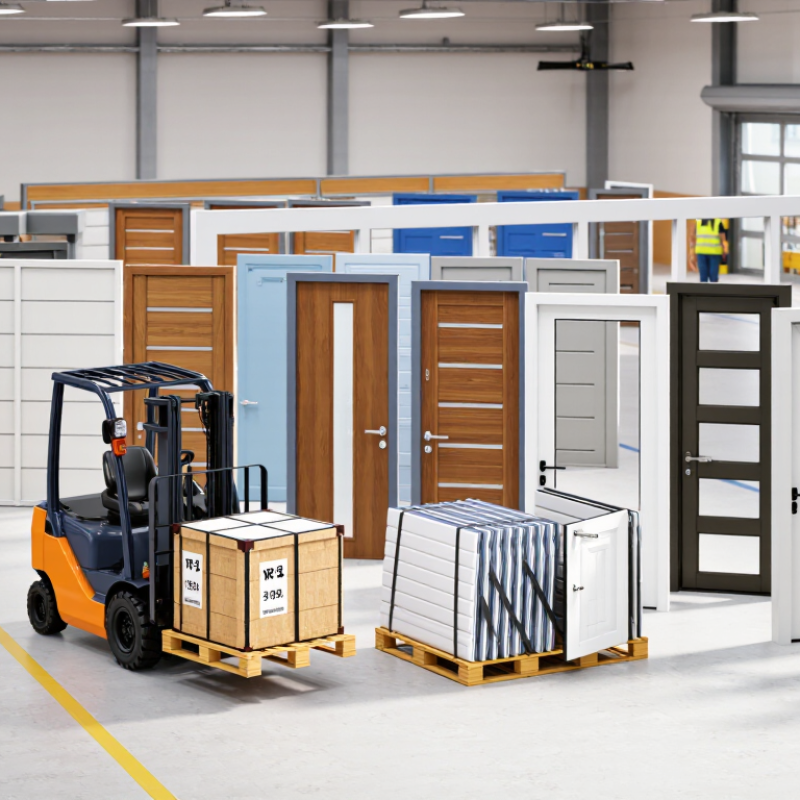
Local garage door suppliers are regional manufacturers, distributors, or service companies that provide doors, hardware, and technical support near their production market. In global trade, their role extends beyond selling products. They connect overseas buyers with local factories, installers, logistics providers, and compliance resources. A strong supplier can explain insulation ratings, spring systems, panel thickness, and installation limits in practical terms. This knowledge reduces costly misunderstandings before production begins.
For global buyers comparing the top ten local garage door suppliers, reliability matters more than attractive quotations. Buyers should review product samples, factory records, packaging methods, and documented quality checks. A dependable supplier confirms dimensions in writing and reports production delays early. Export experience also helps with container loading, spare parts, and after-sales communication. However, local suppliers are not automatically perfect. Some may understand domestic projects better than international specifications. This gap deserves honest discussion.
Tips: Request a sample specification sheet before placing a large order. Check whether the supplier can provide drawings, maintenance instructions, and replacement parts. Ask for photos of packed doors inside a container. Confirm lead times twice. Small details matter. A useful evaluation also includes response speed and problem-solving attitude, not only price. In my view, buyers sometimes focus too heavily on ranking lists. A careful conversation may reveal more than a polished website.
Key Criteria for Ranking the Top Ten Garage Door Suppliers
Top 10 Local Garage Door Suppliers for Global Buyers
Ranking the top ten garage door suppliers requires more than comparing catalog prices. Real purchasing experience shows that dependable delivery begins with production consistency. Suppliers should demonstrate several years of manufacturing practice, trained installation support, and clear quality records. Factory visits, sample inspections, and recent buyer references provide stronger evidence than attractive brochures.
Technical capability carries significant weight. A serious supplier should offer insulated panels, corrosion-resistant tracks, reliable spring systems, and safety-tested opening mechanisms. Ask for test data, including cycle testing and load performance. Custom dimensions, colors, control options, and packaging should be documented before ordering. Export experience also matters because containers face vibration, humidity, and rough handling. Regional safety requirements must be confirmed for every destination.
Reliability deserves a measurable score. Review response times, production lead times, spare-parts access, warranty terms, and after-sales procedures. Transparent quotations should separate product costs, packaging, tooling, and shipping preparation. A supplier with stable subcontractors may perform well, but this point needs careful checking. No ranking is perfect. A factory may pass one inspection and struggle during peak season. For that reason, the top ten should be judged through repeated communication, independent checks, and small trial orders. Records matter. Suppliers that share corrective-action reports appear more credible than those offering only promises.
Regional Profiles of Leading Local Garage Door Suppliers
Top 10 Local Garage Door Suppliers for Global Buyers
Regional Profiles of Leading Local Garage Door Suppliers
Local suppliers often understand regional building habits better than distant exporters. Our ten profiles cover North America, Western Europe, Southeast Asia, the Gulf region, Australia, and South America. Each supplier type reflects different weather, property designs, and installation practices.
In North America, leading suppliers often provide insulated sectional doors for cold winters and attached garages. Western European specialists usually focus on compact designs, thermal performance, and strict safety features. Southeast Asian suppliers commonly offer corrosion-resistant doors for humid conditions. Gulf-region providers tend to recommend heat-tolerant materials and dust-resistant tracks. Australian companies often emphasize wind ratings and robust hardware. South American suppliers may prioritize repairable systems and flexible ordering quantities.
Experience matters during supplier evaluation. Buyers should request installation photos, material specifications, warranty terms, and recent trade references. A reliable supplier can explain spring cycles, panel thickness, motor compatibility, and replacement-part access without vague promises. Local warehouse capacity also reduces delays when damaged components need replacement.
No profile is flawless. A low price may hide limited technical support. A polished catalogue may not reflect factory quality. I would inspect sample hardware before placing a large order. Small details matter: smooth rollers, sealed bearings, accurate measurements, and clear packing labels. Some suppliers communicate well but document poorly. That weakness deserves attention before shipment.
Top 10 Local Garage Door Suppliers for Global Buyers - Regional Profiles of Leading Local Garage Door Suppliers
| Regional Profile | Primary Location | Typical Product Focus | Common Door Materials | Relevant Export Standards | Typical Export Gateway | Typical Minimum Order | Indicative Production Lead Time | Best Fit for Global Buyers |
|---|---|---|---|---|---|---|---|---|
| Profile 01 | Tianjin, China | Sectional garage doors, industrial overhead doors, rolling shutters | Galvanized steel, aluminum, insulated sandwich panels | GB/T requirements for domestic production; EN 13241 for many European export orders | Tianjin Port | 1 mixed container or project-based order | 30–50 calendar days | Importers seeking broad customization and competitive container pricing |
| Profile 02 | Ningbo, China | Residential sectional doors, side-hinged doors, compact rolling doors | Steel, aluminum, coated galvanized sheet | EN 13241 for European projects; UL 325 may apply to powered operators for North American shipments | Ningbo-Zhoushan Port | 50–100 sets or one consolidated shipment | 25–45 calendar days | Regional distributors requiring private-label packaging and flexible dimensions |
| Profile 03 | Foshan, China | Rolling garage doors, fire-rated shutters, commercial security grilles | Aluminum, galvanized steel, stainless steel | EN 13241; project-specific fire and smoke classifications must be verified separately | Shenzhen Port or Nansha Port | 100–300 units, depending on configuration | 30–60 calendar days | Commercial contractors and buyers prioritizing compact security-door solutions |
| Profile 04 | Istanbul, Türkiye | Sectional industrial doors, loading-bay doors, rolling shutters | Insulated steel panels, aluminum, galvanized steel | EN 13241 and EN 12453 for applicable powered-door installations | Ambarli Port | 10–30 doors or project order | 20–40 calendar days | Buyers serving Europe, the Middle East and North Africa with shorter regional transit |
| Profile 05 | Poznań, Poland | Insulated residential sectional doors and automated garage systems | Galvanized steel, polyurethane-insulated panels, aluminum | EN 13241 and EN 12453; CE documentation is commonly required for applicable products | Gdańsk Port or Hamburg Port | 10–25 sets | 15–35 calendar days | European wholesalers seeking insulated products and regional after-sales support |
| Profile 06 | Lombardy, Italy | Custom residential doors, sectional doors, architectural garage entrances | Steel, aluminum, timber-faced panels | EN 13241, EN 12453 and applicable European conformity requirements | Genoa Port or La Spezia Port | 5–15 customized doors | 25–50 calendar days | Architectural projects and buyers requiring design-led customization |
| Profile 07 | North Rhine-Westphalia, Germany | High-cycle industrial doors, insulated sectional doors, logistics doors | Steel, aluminum, transparent insulated panels | EN 13241, EN 12453 and project-specific workplace safety requirements | Rotterdam Port or Hamburg Port | Project-based; commonly 5–20 doors | 30–60 calendar days | Warehouses, factories and buyers requiring high-cycle performance documentation |
| Profile 08 | Midwestern United States | Residential sectional doors, commercial overhead doors, operator-ready systems | Galvanized steel, aluminum, composite panels | UL 325 for door operators; ASTM F2200 for residential garage-door safety requirements | Chicago or Los Angeles/Long Beach, depending on supply route | 20–50 doors or distributor replenishment order | 15–35 business days | North American distributors requiring local code familiarity and replacement parts |
| Profile 09 | Ontario, Canada | Insulated sectional doors, cold-climate garage doors, commercial overhead doors | Galvanized steel, insulated steel panels, aluminum | CSA C22.2 No. 247 for applicable door operators; local building and electrical requirements also apply | Port of Montreal or Toronto-area intermodal terminals | 10–30 doors | 20–45 business days | Buyers serving cold-weather markets and requiring higher insulation specifications |
| Profile 10 | Victoria, Australia | Roller garage doors, sectional doors, wind-rated residential systems | Aluminum, galvanized steel, coated steel | AS/NZS 4505 for garage doors; AS/NZS 60335.2.95 may apply to residential door operators | Port of Melbourne | 10–25 doors or regional dealer order | 20–45 business days | Distributors in Australia and Oceania requiring local installation compatibility |
Product Quality, Customization, and International Compliance
Top 10 Local Garage Door Suppliers for Global Buyers
Product Quality, Customization, and International Compliance
A strong local supplier should prove quality beyond attractive catalog images. The 2024 Garage Door Market report estimates steady global growth through 2032, driven by residential construction and replacement demand. This growth increases supplier choice, but also increases quality risks. Buyers should request material certificates, cycle-test records, coating specifications, and inspection photos. Steel thickness, spring durability, weather seals, and panel insulation affect real performance. Small details matter.
Customization must fit the destination, not only the buyer’s design. Reliable suppliers can adjust panel sizes, colors, window layouts, opening systems, and packaging. They should also understand local wind loads, voltage, fire expectations, and installation practices. For international compliance, ask for documents aligned with EN 13241, ISO 9001 procedures, or ANSI/DASMA safety requirements, depending on the market. Certificates alone are insufficient. Verify issuing laboratories and match product codes carefully. I have seen paperwork copied from older models. That mistake is expensive.
Tips: Compare three suppliers using the same technical checklist. Request one production sample before bulk orders. Confirm pallet dimensions, spare-part availability, and warranty responsibilities in writing. Ask for third-party test reports, not only factory declarations. A useful supplier should explain failures honestly. No supplier is perfect. The best one makes weaknesses visible and offers a practical correction plan.
Top 10 Local Garage Door Suppliers for Global Buyers
Anonymous benchmark based on product quality, customization capability, export readiness, safety documentation, delivery reliability, and after-sales support.
Scores use a 100-point procurement scale. Quality consistency and international compliance receive the highest weighting because global buyers typically require documented quality systems, safety conformity, stable production, and export-ready technical files.
Ordering, Shipping, and Supplier Evaluation for Global Buyers
Top 10 Local Garage Door Suppliers for Global Buyers
Ordering from a local garage door supplier requires more than comparing unit prices. Ask for drawings, material grades, loading photos, and a complete spare-parts list. A practical purchase order should specify panel thickness, insulation value, track dimensions, spring cycles, surface treatment, and packaging standards. Request one physical sample before confirming a container. It may cost more, but it reveals weak hinges, poor seals, or inaccurate measurements early.
Shipping details deserve equal attention. UNCTAD reports that maritime transport carries over 80% of global merchandise trade by volume. Therefore, calculate pallet dimensions, container utilization, moisture protection, and port charges before payment. Use clear Incoterms, verified carton markings, and a commercial invoice matching the actual goods. The World Bank’s 2023 Logistics Performance Index covers 139 economies and evaluates customs, infrastructure, tracking, and delivery reliability. Check the supplier’s export records and ask how they handle damaged panels or missing hardware.
Supplier evaluation should combine documents with direct evidence. Review factory capacity, quality-control records, response times, and inspection procedures. Ask for batch photos with dates, not only polished catalog images. Independent pre-shipment inspection can verify quantity and dimensions. Still, inspection is not magic. A supplier may pass one order and disappoint on the next. I would keep a small test order first, record every defect, and compare promised delivery dates with actual arrival data. Industry reports provide useful direction, but real transactions expose the uncomfortable gaps.
Related Posts
-
Top Local Garage Door Suppliers Worldwide
-

How to Find a Reliable Garage Door Specialist?
-

2026 Top Trends in Garage Door Styles and Innovations?
-

Why Choose Residential Roll Up Garage Doors for Your Home?
-

Why Choosing a Local Garage Door Service is the Best Decision for Your Home
-
What is a Local Garage Door and How to Choose the Right One?