
Skip to Content
chevron-left chevron-right chevron-up chevron-right chevron-left arrow-back star phone quote checkbox-checked search wrench info shield play connection mobile coin-dollar spoon-knife ticket pushpin location gift fire feed bubbles home heart calendar price-tag credit-card clock envelop facebook instagram twitter youtube pinterest yelp google reddit linkedin envelope bbb pinterest homeadvisor angies

China Top Polyethylene Floats Manufacturers and Suppliers

Polyethylene Floats may look simple from shore: hollow modules, molded edges, and a steady line supporting a dock, aquaculture system, or pipeline. Their performance depends on less visible details. Resin quality, wall thickness, ultraviolet resistance, weld consistency, and rated buoyancy all affect service life. For buyers comparing China Top Polyethylene Floats Manufacturers and Suppliers, those details deserve more attention than price alone.

The wider plastics context matters, but it should not be confused with float-specific market data. The OECD’s 2022 Global Plastics Outlook estimates that plastic waste reached 353 million tonnes worldwide in 2019; only 9% was ultimately recycled. The report does not measure polyethylene floats separately. Still, it underlines why product durability, repair options, and end-of-life planning belong in supplier discussions. The figures are sobering.

Dr. Jenna Jambeck’s research on plastic pollution offers a useful reminder: prevention depends on better product design and waste management, not material choice alone. This is a paraphrase of her research perspective, not a verbatim quotation. A reliable supplier should provide clear specifications, test records, material information, and practical guidance for installation and maintenance. Buyers should also ask how performance claims were verified. A polished catalogue is not proof. This guide introduces manufacturers and suppliers in China, while encouraging readers to check evidence, compare like-for-like specifications, and question claims that remain vague.
China Top Polyethylene Floats Manufacturers and Suppliers

Understanding Polyethylene Floats and Their Main Applications

China Top Polyethylene Floats Manufacturers and Suppliers

Understanding Polyethylene Floats and Their Main Applications

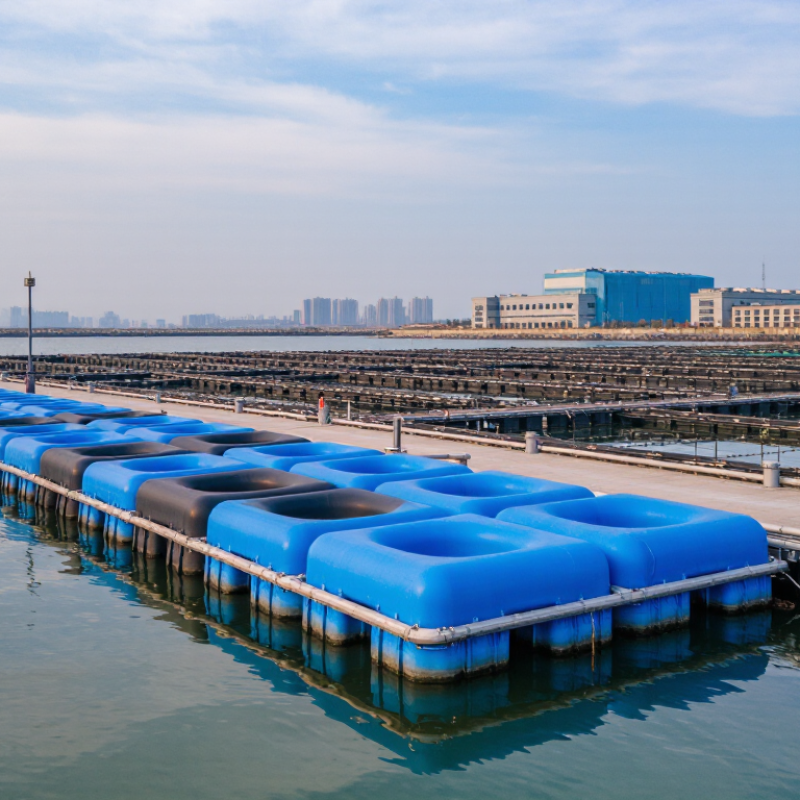
Polyethylene floats provide buoyancy for aquaculture cages, floating docks, marina walkways, and some pipeline systems. Many are rotationally molded from polyethylene, with hollow chambers or foam filling. Their low weight makes handling easier, while molded surfaces can resist routine water exposure. Design still matters. Wall thickness, UV stabilization, fittings, and load distribution affect service performance.

The scale of aquaculture helps explain demand for dependable flotation. FAO’s The State of World Fisheries and Aquaculture 2024 reports 130.9 million tonnes of aquaculture production in 2022, including aquatic animals and algae. This figure does not measure float use, but it shows the operating scale of water-based production. In fish farms, floats support cage frames and walkways; in dock systems, they help keep platforms level under changing loads.

Choosing a float is not just about its rated buoyancy. Waves, sunlight, temperature changes, and repeated loading can alter real-world performance. Check connections and inspect for cracks or water ingress, especially after storms. One practical detail is sometimes missed: a larger float is not automatically safer if the frame distributes weight unevenly. Field conditions vary, and specifications deserve careful review.

How Polyethylene Floats Are Designed and Manufactured

Designing a polyethylene float begins with its intended load, water conditions, and mounting points. Engineers estimate displacement, then add a practical margin for waves, attached equipment, and changing loads. The shell’s shape also matters: broad sections can improve stability, while rounded edges help reduce stress concentrations. Small details matter.

Manufacturing commonly uses rotational molding. Polyethylene powder is placed inside a heated mold, which rotates so the softened material coats its interior. After cooling, workers inspect wall thickness, seams, and molded features. UV stabilizers may be included to slow sunlight-related aging, though performance depends on exposure and material formulation. Inserts or attachment points need careful placement, since poorly supported fittings can loosen under repeated movement.

Quality checks may include dimensions, visual inspection, and buoyancy testing under specified conditions. A prototype can reveal issues that calculations miss, such as awkward lifting points or unexpected flex near a fastener. Still, one test cannot represent every season or installation. Manufacturers and buyers should clarify expected loads, water conditions, and maintenance needs before selecting a design. A clean drawing is useful, but real operating feedback often changes the next version.

Criteria for Evaluating China-Based Manufacturers and Suppliers

China Top Polyethylene Floats Manufacturers and Suppliers

Evaluating China-based polyethylene float suppliers means checking more than price and quoted buoyancy. Ask for the resin grade, float dimensions, wall thickness, and documented load-test method. For marine use, request evidence of UV and saltwater exposure testing, plus details on seams, plugs, and repair procedures. Details matter. A sample should be measured and inspected under realistic conditions, not just photographed on a desk.

The OECD’s Global Plastics Outlook (2022) reports that global plastics production reached 460 million tonnes in 2019, up from 234 million tonnes in 2000. It also estimates that only 9% of plastic waste was recycled that year. These figures describe the wider plastics industry, not float quality. Still, they make material traceability and clear end-of-life information useful questions for supplier audits. Ask for batch records, test reports, and written specifications that match the actual production run.

Compare suppliers on consistent criteria: production capacity, dimensional tolerances, inspection frequency, sample lead time, and after-sales support. Request a recent quality-control record and check whether the stated tolerances appear on the product drawing. Test the samples. Even careful buyers can overvalue a low unit price; freight, packaging, and replacement time may change the real cost. A detailed report helps, but it cannot replace inspecting a float in the water. That part is easy to overlook.

Key Product Features, Customization, and Quality Standards

China’s polyethylene float manufacturers and suppliers serve applications ranging from aquaculture lines to floating barriers. A suitable float should match the load, water conditions, and expected service life. Check the stated material, wall thickness, dimensions, buoyancy, and UV-resistance details. These affect handling and performance outdoors. Ask for product drawings and test records, not just a catalog image. Small details matter.

Customization may include color, shape, mounting holes, rope channels, and connection points. Share measurements and operating conditions before requesting a quote. For example, describe the expected load and whether floats face strong sunlight, abrasion, or repeated impact. Suppliers can then clarify design limits and recommend a sample for fit checks. A custom feature is not automatically an improvement; extra openings, for instance, may need careful sealing.

Tips: Compare written specifications across suppliers. Confirm how buoyancy and dimensions are checked, and request inspection records for the production batch. Ask how defects are handled. If the sample feels right but the documentation is vague, pause and ask again. That extra check can prevent an avoidable mismatch.

Sourcing, Pricing, and Export Considerations for Buyers

When sourcing polyethylene floats from Chinese manufacturers and suppliers, compare specifications before comparing prices. Ask for dimensions, wall thickness, material grade, buoyancy capacity, and UV-resistance details. A float intended for a sheltered pond may not suit repeated sun exposure or rough handling. Request a sample and inspect its seams, surface finish, and fit with your existing hardware. Small differences matter.

Pricing depends on order volume, tooling, color, packaging, and shipping terms. Ask suppliers to separate unit cost, mold charges, and freight estimates. Clarify the minimum order quantity and whether the quoted price includes export packaging. A low quote can still be misleading. I may be overchecking, but written specifications make later discussions easier. Confirm the payment schedule and production lead time before approving a purchase order.

For export planning, agree on the named delivery point and who arranges each shipping leg. Check carton dimensions and gross weight; bulky floats can make freight costs rise quickly. Request a packing list, commercial invoice, and any product or material documents relevant to your destination. Ask how defects are recorded and handled, including who pays return freight. Keep approved samples and signed specifications on file. Details get missed. A clear inspection plan helps, even when both sides seem aligned.

China Top Polyethylene Floats Manufacturers and Suppliers - Sourcing, Pricing, and Export Considerations for Buyers
Product or sourcing item Typical specifications Indicative order quantity Indicative FOB China price Buyer checks and export considerations
Small utility and net floats Rotomolded polyethylene; commonly spherical, oval, or cylindrical; approximately 100–300 mm, with attachment holes or molded eyes available. About 200–1,000 pieces, depending on size, color, and tooling requirements. Approximately US$1–8 per piece for common, lightweight designs. Confirm dimensions, wall thickness, buoyancy, hole layout, color consistency, and whether the quoted price includes accessories.
Aquaculture and fish-farm floats UV-stabilized Pe Floats or modular buoyancy units; designs vary by cage, net, and farm layout. Some models use a foam-filled shell. About 50–300 pieces; project orders may be quoted by complete system. Approximately US$5–40 per piece, depending on capacity, construction, and fittings. Request net buoyancy and load information, resin and UV-additive details, attachment drawings, and samples for fit testing.
Dock and pontoon floats Large hollow or foam-filled PE units, commonly supplied as blocks, drums, or modular sections; dimensions are project-specific. About 20–100 pieces or one project lot. Approximately US$20–120 per piece; large or custom units can exceed this range. Check rated buoyancy, overall dimensions, wall construction, connection points, UV resistance, and the loading plan for bulky cargo.
Mooring and navigation buoys Rotomolded PE body, often with a ballast compartment, chain attachment, or hardware provision; size and color depend on intended use. About 10–100 pieces, with larger projects commonly quoted separately. Approximately US$15–150 per piece, excluding some lighting, chain, and other optional equipment. Specify intended environment, buoyancy, ballast, lifting points, color, reflective elements, and any destination-specific navigation requirements.
Custom-molded PE floats Made to buyer drawings or a supplier’s existing mold; custom colors, logos, inserts, and fittings may be available. Often 300–1,000 pieces for a new design; lower quantities may be possible with an existing mold. Unit price is quotation-based; mold or tooling charges may apply separately. Agree on mold ownership, sample approval, dimensional tolerances, change control, and responsibility for tooling storage before placing an order.
Material and production checks Ask whether the part is made from HDPE, LLDPE, or another specified PE grade; confirm whether it is hollow or foam-filled. Apply to every order. Not applicable. Request a material declaration, production sample, agreed inspection criteria, and test evidence relevant to the application. Do not assume a generic “UV-resistant” claim guarantees a stated service life.
Quotation and price comparison Compare the same dimensions, net buoyancy, material, fittings, packaging, order quantity, and delivery term. Obtain quotes against the same specification and quantity breaks. Ranges above are planning estimates, not live offers; confirm current prices directly with suppliers. Ask for separate pricing for tooling, samples, packing, inland transport, and export charges. State the agreed Incoterms® rule and named place or port in the purchase contract.
Lead time and shipment planning Production time varies with mold availability, order size, customization, and seasonal factory capacity. Confirm before deposit and production scheduling. Freight is excluded from FOB unit-price estimates. Obtain a written production schedule and confirm packing dimensions, gross weight, container loading plan, and shipment-ready date.
Export documents and customs Document requirements depend on the destination, product use, and contract terms. Confirm with the supplier and destination customs broker before shipment. Documentation and destination charges may be quoted separately. Typically review the commercial invoice, packing list, transport document, and any required certificate of origin or conformity documents. Confirm tariff classification and import requirements with a qualified customs broker; do not rely on a generic HS-code estimate.
Pricing note: All price and order-quantity ranges are indicative budgeting references for common product types, not verified supplier quotations. Actual costs vary with size, resin grade, construction, buoyancy, fittings, color, tooling, quantity, packaging, exchange rates, and shipment terms. Obtain a current written quotation and approved sample before ordering.

Article Source: