Skip to Content
chevron-left chevron-right chevron-up chevron-right chevron-left arrow-back star phone quote checkbox-checked search wrench info shield play connection mobile coin-dollar spoon-knife ticket pushpin location gift fire feed bubbles home heart calendar price-tag credit-card clock envelop facebook instagram twitter youtube pinterest yelp google reddit linkedin envelope bbb pinterest homeadvisor angies

2026 Best Garage Opener for Global Buyers

Choosing the right garage opener in 2026 involves more than comparing motor power or online ratings. Global buyers face different garage sizes, ceiling heights, voltage systems, weather conditions, and smart-home standards. A reliable garage opener should lift the door smoothly, protect users from accidents, and remain dependable after thousands of cycles.

This guide examines practical choices for homes, workshops, and small commercial properties. We consider drive systems, lifting capacity, noise, battery backup, remote access, and installation requirements. We also look at compatibility with local power supplies and common smart-home platforms. A quiet belt drive may suit a bedroom beside the garage. A chain drive may offer stronger value for a detached workshop. In coastal areas, sealed components and corrosion-resistant hardware deserve closer attention.

Real-world details matter. A heavy double door can strain an undersized motor. A weak Wi-Fi signal can make remote control unreliable. A backup battery becomes useful during storms or local power cuts. Small differences matter.

Our recommendations are based on manufacturer specifications, user experience, safety features, and long-term practicality. However, no single model fits every country or property. Product availability, installation standards, and service quality can change by region. We may overlook a newer model or a local preference. That limitation deserves honesty.

Before buying, measure the door, check the power supply, and confirm professional installation options. The best garage opener is not always the most expensive one. It is the model that fits your door, climate, routine, and support network.
2026 Best Garage Opener for Global Buyers

What to Know About Garage Openers in 2026

Garage openers in 2026 are no longer judged only by lifting speed. Global buyers should examine power, security, connectivity, noise, and local support. These details affect daily safety more than a glossy feature list. Measure first. Ceiling height, door weight, track condition, and outlet space determine compatibility. For heavy insulated doors, a stronger drive system may reduce strain and premature wear. However, oversizing can increase cost without improving everyday performance. That is easy to miss.

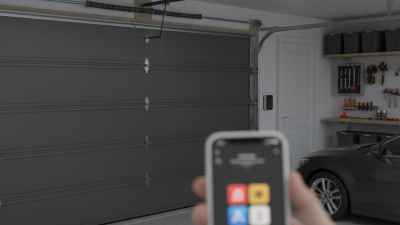
Smart control is useful, but it should not become the only control method. Check whether the opener works with your phone, home network, and preferred voice system. Cloud outages happen. Keep a physical remote and test the emergency release according to the manual. Look for encrypted communication, activity alerts, and adjustable user permissions. A camera can help, yet it may create privacy concerns in shared households. Read the data policy before connecting it. Some buyers assume every smart function works worldwide. It does not. Regional frequencies, app restrictions, and voltage differences can limit features.

Dependability begins with installation, not the product page. Use a qualified local installer when wiring, spring balance, or structural alignment needs attention. Ask about spare parts, warranty coverage, service response, and support language. For international purchases, confirm input voltage and frequency in writing. A plug adapter cannot correct incompatible voltage. Keep the manual accessible. One practical weakness remains: buyers often prioritize app features over repairability. That choice can age badly. An opener with fewer features, clear diagnostics, and available parts may serve longer. Performance is rarely perfect in every climate. Salt air, dust, cold, and unstable power deserve attention before ordering.

How to Compare Opener Types for Different Garage Doors

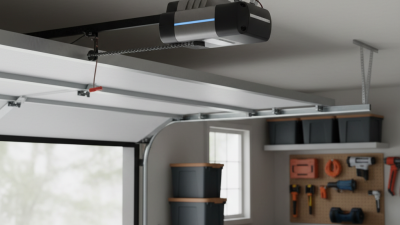
Choosing the best garage opener in 2026 starts with the door, not the motor. Sectional doors usually work well with chain, belt, or direct-drive openers. Chain systems handle heavy doors and frequent use, but they can sound sharp in an attached garage. Belt systems are quieter, especially near bedrooms, though their price may be higher. Direct-drive units have fewer moving parts and may reduce routine maintenance.

Tilt-up doors need careful compatibility checks. Their swing path must remain clear before an opener is installed. A screw-drive mechanism can provide steady lifting, but it may perform poorly in very cold or dusty environments. Side-hinged doors often require a specialized arm system rather than a standard ceiling-mounted unit. Roll-up doors may need a wall-mounted opener, particularly when ceiling space is limited. Measure the drum, tracks, door weight, and available side clearance.

Check the door balance by lifting it manually with the opener disconnected. It should move smoothly and stay partly open without dropping. A heavy, unbalanced door can damage even a powerful motor. I have seen buyers focus on lifting force while ignoring track alignment. That is an expensive oversight. Noise, backup power, remote range, and local electrical standards also deserve attention. Some specifications look impressive on paper. Real garage conditions can be less cooperative.

2026 Best Garage Opener for Global Buyers - How to Compare Opener Types for Different Garage Doors

Opener Type Best-Matched Garage Doors Typical Drive Mechanism Typical Lifting Capacity Noise Level Installation Requirements Advantages Limitations Global Buyer Considerations Overall Suitability
Chain-Drive Trolley Most residential sectional doors; some compatible one-piece tilt-up doors Metal chain moves a trolley along a ceiling-mounted rail Commonly about 600–1,200 N, depending on door weight and model ★★★☆☆ Moderate Requires a stable ceiling, overhead clearance, and a correctly aligned rail Strong, widely available, generally economical, and suitable for frequent operation More vibration and operating noise than belt-driven systems; chain lubrication may be required Check local electrical standards, plug type, radio-frequency rules, and replacement-chain availability Best value for sectional doors
Belt-Drive Trolley Residential sectional doors, especially garages attached to living areas Reinforced rubber or polyurethane belt moves a trolley on a rail Commonly about 600–1,200 N ★★★★☆ Quiet Needs overhead rail space, a rigid mounting point, and accurate door balance Quieter and smoother than most chain systems; low routine lubrication needs Usually costs more than chain-drive systems; belt wear can increase under harsh conditions For hot, cold, humid, or dusty regions, confirm the belt material and operating-temperature range Best for quiet operation
Screw-Drive Trolley Sectional doors and selected tilt-up doors with adequate overhead clearance Threaded steel drive screw moves a traveling carriage Commonly about 700–1,200 N ★★★☆☆ Moderate Requires a straight, stable overhead rail and periodic drive lubrication Fewer moving parts than chain systems; direct mechanical movement can provide consistent travel Performance and noise may be affected by extreme temperatures or insufficient lubrication Confirm that service lubricants and compatible replacement parts are available locally Good for stable climates
Direct-Drive Trolley Residential sectional doors where quiet, low-vibration operation is important Motor travels along a fixed stationary chain or rail while lifting the door Commonly about 600–1,000 N ★★★★☆ Quiet Requires overhead mounting, adequate headroom, and a properly balanced door Few moving components, smooth operation, and reduced vibration Less common in some markets; a complete rail or motor replacement may be needed for repairs Review local installer familiarity, spare-part logistics, and warranty service coverage Best for low vibration
Jackshaft / Side-Mount Sectional doors with limited ceiling space; some high-lift or vertical-lift configurations Motor turns a torsion-bar shaft to lift the door from the side Commonly about 600–1,000 N equivalent output, subject to shaft torque ★★★★☆ Quiet to moderate Needs a compatible torsion-spring system, side clearance, and a reliable shaft connection Leaves the ceiling clear, supports better overhead storage, and may include automatic locking features Not suitable for every door; installation and adjustment require greater technical skill Confirm spring-system compatibility, side-wall structure, local installation expertise, and emergency-release access Best for limited headroom
Slide-to-Side Selected sectional doors with suitable side room and compatible horizontal tracks Motor pulls the door horizontally along the side track Varies widely; selected according to door mass, friction, and travel length ★★★★☆ Quiet to moderate Requires side clearance, compatible track geometry, and accurate travel-limit setup Uses little overhead space and can work well where a conventional ceiling rail is impractical Less universally compatible; side-wall installation and door alignment are critical Check whether local technicians support the system and whether the door hardware meets regional standards Best for unusual layouts
Roller-Shutter Opener Rolling garage doors and compact roller shutters with a suitable barrel or side-drive system Tubular, side-mounted, or barrel motor rotates the door curtain around a shaft Often specified by curtain weight and shaft torque rather than trolley force ★★★★☆ Quiet to moderate Requires compatible curtain guides, shaft dimensions, stops, and anti-drop protection where applicable Space-efficient and well suited to compact garages with little ceiling depth Usually incompatible with standard sectional-door hardware; curtain friction can affect performance Check wind-load requirements, manual override rules, local safety regulations, and available curtain parts Best for roller doors
Sliding-Gate / Sliding-Door Operator Horizontal sliding garage doors and heavy side-sliding doors Rack-and-pinion or chain transmission moves the door laterally Specified by door mass and required horizontal thrust, commonly from several hundred kilograms upward ★★★☆☆ Moderate Needs a level track, end stops, anti-crush protection, and sufficient side space Can automate wide or heavy sliding doors that cannot use a ceiling-mounted opener Requires clear floor tracks and is unsuitable for vertically lifting door designs Verify gate-safety standards, photocell requirements, drainage, frost protection, and local electrical certification Best for side-sliding doors
Articulated-Arm Operator Some side-hinged or swing-out garage doors Motorized articulated arms push or pull each door leaf Selected by door-leaf weight, width, hinge geometry, and wind exposure ★★★☆☆ Moderate Requires strong hinge-side mounting surfaces, correct arm geometry, and sufficient swing clearance Can automate side-hinged doors without converting them to a sectional system Door leaves must be properly aligned; wind resistance and uneven loading can reduce reliability Check emergency-release access, pedestrian safety, opening angle, and local rules for swing doors Best for side-hinged doors

Comparison values are typical design ranges rather than universal specifications. Final selection should be based on the door’s measured weight, dimensions, balance, travel path, spring system, available clearance, local electrical voltage and frequency, safety regulations, and installer support.

Which Features Matter for Global Compatibility and Smart Control

2026 Best Garage Opener for Global Buyers

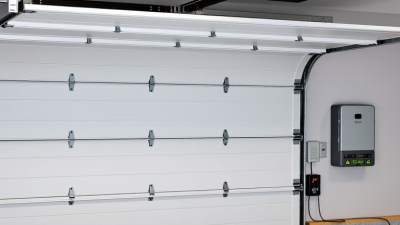
Global compatibility starts with more than voltage support. Check whether the opener accepts local power standards, plug types, and safety requirements. A unit rated for 100–240V is usually easier to deploy across regions. However, the motor and wiring still need professional inspection.

Radio compatibility matters just as much. Remote frequencies differ between markets, so confirm regional support before installation. Rolling-code security helps reduce replay risks. A wired wall control is also valuable when wireless signals become unreliable. Keep the manual release accessible. It may matter during a power outage.

Smart control should work beyond one home network. Dual-band Wi-Fi can improve installation flexibility, while Bluetooth may help during first-time setup. Look for secure encryption, clear permission controls, and timely software updates. Local control is preferable when cloud service access is interrupted. A physical status light helps users confirm whether the door is closed. Small detail, big value.

Test the safety reversal system with a soft object, not a person. Check sensor alignment after temperature changes or minor impacts. I once underestimated signal loss through a concrete garage wall. That mistake required an extra access point. Not every advertised feature performs equally in every home. Read the technical manual, verify regional support, and confirm that replacement parts are available locally.

How to Evaluate Safety, Power, Noise, and Maintenance Needs

Choosing the best garage opener for global buyers starts with safety, not speed. In real installations, safety begins with correctly aligned photo eyes and a tested auto-reverse function. Place a soft object under the door and confirm that it reverses without hesitation. Keep hands clear. A manual release should remain reachable during power failures. For international use, verify voltage, frequency, plug type, and local installation requirements before ordering. A qualified technician can catch wiring risks that product pages often miss.

Power requirements depend on door weight, balance, height, and daily use. A heavy wooden door needs more lifting force than a lightweight insulated model. However, more power does not fix poor spring balance. Ask for measured lifting capacity, not vague performance claims. Noise also matters in bedrooms or attached homes. Grinding, rattling, or sharp clicks may indicate worn hardware. Belt systems can sound softer, but quiet operation may hide developing faults. I once underestimated this during a home inspection. The opener was quiet, yet the door tracks were badly misaligned.

Maintenance should be simple enough for an ordinary owner. Choose clear instructions, accessible adjustment points, and readily available replacement parts. Inspect mounting bolts, cables, rollers, and safety sensors regularly. Lubricate only approved components. Replace remote-control batteries before they fail unexpectedly. Keep a basic service record. Coastal air, dust, freezing temperatures, and voltage fluctuations can shorten service life. A dependable evaluation leaves room for uncertainty, because installation quality often matters as much as the opener itself.

How to Choose the Best Garage Opener for Your Market and Budget

2026 Best Garage Opener for Global Buyers

Choosing the best garage opener starts with the market, not the product photo. Grand View Research valued the global smart home market at USD 121.59 billion in 2023. It also forecasts a 10.67% annual growth rate from 2024 to 2030. This growth supports connected openers, but connectivity should not replace basic safety. Check local voltage, radio frequency rules, and required certifications before comparing features. European buyers may need compliance with EN 12453, while other markets may follow different electrical and safety requirements. A local installer can identify mistakes that online specifications often hide.

Match the opener to the door’s weight, height, and daily cycle count. A light residential door needs less power than a heavy sectional door used twenty times daily. Measure the ceiling clearance and rail length first. Wi-Fi access is useful when delivery staff need temporary entry, but it adds network and privacy considerations. Rolling-code remotes, obstacle detection, manual release, and battery backup deserve higher priority than decorative apps. Markets with frequent outages should treat backup power as essential. Warm coastal regions need corrosion-resistant hardware; cold areas need lubricants suited to low temperatures.

Budget for installation, replacement remotes, and future servicing. The cheapest unit may become expensive after repeated repairs. I still see buyers overvalue app control and undervalue cycle testing. That choice deserves reconsideration. Compare the warranty terms, spare-part availability, and installer training in your country. A trustworthy supplier should provide test records, clear manuals, and realistic load limits, not vague promises.