How to Choose the Best Overhead Garage Door in 2026?
Choosing the best overhead garage door in 2026 requires more than matching colors with your exterior. It means examining daily use, climate, security, insulation, maintenance, and installation quality. A door may look impressive online, yet feel noisy, fragile, or poorly balanced after several winters.
Tom Wadsworth, a longtime garage-door industry educator, reminds homeowners that “a garage door is the largest moving object in most homes.” That observation deserves attention. Size affects safety, energy loss, operating noise, and long-term repair costs. The right choice should open smoothly at 7 a.m., seal tightly during heavy rain, and withstand repeated cycles without shaking.
Begin by measuring the opening, headroom, side clearance, and available ceiling space. Then compare steel, aluminum, wood, and composite materials. Insulated steel often suits attached garages with bedrooms above them. Wood offers warmth, but demands more care. Aluminum can provide a modern appearance, although some models dent easily.
Smart openers, battery backup, improved weather seals, and stronger safety sensors matter in 2026. However, technology should not distract from basic construction. A connected opener cannot correct weak tracks or careless installation. That is easy to forget.
I have seen homeowners focus on decorative windows while ignoring wind ratings and spring quality. That choice can become expensive. No checklist is perfect. Your local weather, household routine, and budget should shape the final decision. A reliable installer can expose flaws before they become daily frustrations.
Define Overhead Garage Door Types and Operation Systems for 2026
How to Choose the Best Overhead Garage Door in 2026?
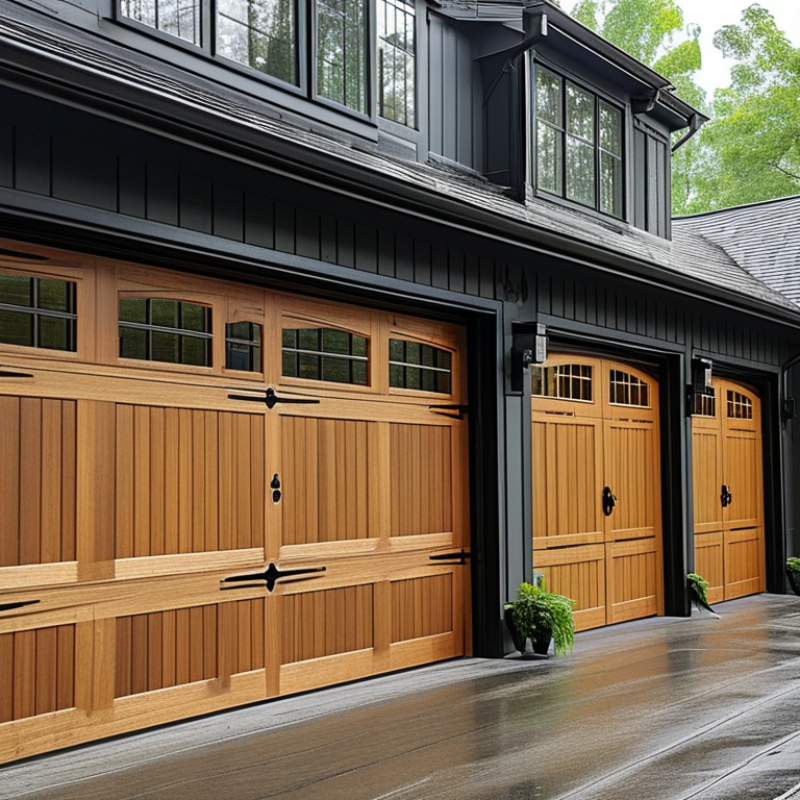
An overhead garage door usually means a door that moves upward and rests above the opening. Sectional doors use several hinged panels. They follow tracks and seal well against rain, dust, and cold air. Roll-up doors coil above the opening, saving ceiling space. Tilt-up doors lift as one rigid panel, but they need more clearance outside.
The operating system also matters. Manual lifting can suit a small, lightweight door, although daily use becomes tiring. Electric openers provide controlled movement and automatic closing. Chain drives are strong and practical, while belt drives usually operate more quietly. Screw-drive systems need less maintenance, but they may perform differently in extreme temperatures. Smart controls can add phone access, alerts, and battery backup. Convenience is useful, but it should not replace regular safety checks.
Tips: Stand inside the garage and measure ceiling height, side clearance, and backroom space. Check the door’s weight before selecting an opener. Test the auto-reverse feature monthly with a safe object. Ask a qualified installer to inspect springs, tracks, and mounting points. My first assumption was that the quietest system was always best. It was not. A poorly balanced door can make any opener struggle. Choose insulation based on your garage’s real use, not appearance alone. Check current local safety requirements before installation.
How to Choose the Best Overhead Garage Door in 2026?
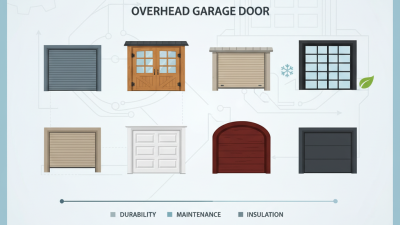
Door construction affects insulation, durability, and maintenance, while the operating system determines convenience, noise, and installation requirements.
Door Types
Single-layer steel doors are economical and lightweight. Wood doors provide a traditional appearance. Insulated steel doors use polystyrene or polyurethane between steel skins for improved thermal performance.
Operating Systems
Chain-drive openers are durable and cost-effective. Belt-drive systems are generally quieter. Screw-drive systems have fewer moving parts, while jackshaft openers mount beside the door and are useful where ceiling space is limited.
How to Read the Chart
The chart shows representative nominal insulation values for common residential overhead-door constructions. Actual R-values vary by panel design, thickness, seals, windows, and installation quality.
Evaluate Safety Compliance Under UL 325 and ASTM F2200 Standards
How to Choose the Best Overhead Garage Door in 2026?
Safety compliance deserves more attention than color or insulation.
UL 325 focuses on powered door operators and entrapment protection. Look for monitored photoelectric sensors, force-limiting controls, and automatic reversal features. These systems should respond when an object interrupts the beam. Test them regularly, not only during installation. A door that looks secure may still have a poorly adjusted opener.
ASTM F2200 addresses the construction of automated vehicular gates.
It may not directly govern every residential overhead garage door. That distinction matters. Confirm which standards apply to your door, operator, property, and local inspection rules. Ask for compliance documentation, installation instructions, and service records. A qualified technician should verify sensor alignment, emergency release access, mounting strength, and control placement.
Small details can prevent serious injuries.
Keep the closing path clear, especially near toys, bicycles, and stored tools. Do not rely on a wall button alone. Children should not operate the system without supervision. I would also question vague claims such as “fully compliant” without a specific standard or test reference. Compliance labels can be misunderstood, and installation quality can change performance. Even a certified operator needs periodic inspection, because vibration, weather, and worn cables can create hazards over time.
Measure Door Dimensions, Headroom, and Opener Capacity Accurately
How to Choose the Best Overhead Garage Door in 2026?
Accurate measurements prevent expensive installation changes. Measure the opening width and height at three points, then record the smallest readings. Check the floor with a long level. A sloping floor can make a standard door appear incorrectly sized. Measure headroom from the top of the opening to the lowest obstruction, such as a beam, duct, or light fixture. Also record side room and backroom clearance. I still remeasure every dimension twice. Assumptions are costly.
DASMA technical guidance treats headroom and operator clearance as installation-specific, not universal figures. A basic torsion-spring system may need roughly 12 inches of headroom, while low-clearance hardware can change that requirement. Confirm the exact track design before ordering. Measure backroom beyond the opening as well. The door height, track angle, and opener rail must fit together. A few inches matter.
Do not select an opener by horsepower alone. An accurately balanced door should lift smoothly by hand, while the opener’s rated door size, weight, cycle rating, and travel limits must match the installation. Have a qualified technician verify spring balance and actual door weight. The 2024 Zonda Cost vs. Value Report recorded about 194% cost recoupment for upscale garage-door replacement, showing why installation quality affects value. That figure is regional, not guaranteed. My practical mistake was trusting a nominal door size without checking ceiling obstructions. Measure the space, not the catalog.
Compare Lifecycle Costs, Warranties, Energy Savings, and Maintenance Data
How to Choose the Best Overhead Garage Door in 2026?
A low purchase price can hide expensive repairs, energy loss, and early replacement. Compare the full lifecycle cost instead. The calculation should include the door, opener, installation, inspections, hardware, and disposal. The 2024 Cost vs. Value Report found that garage door replacement recovered about 194% of its average project cost at resale. That figure is regional, not guaranteed. It also reflects market value, not your monthly energy bill.
For an attached garage, insulation and air sealing deserve close attention. The U.S. Department of Energy reports that air sealing can reduce heating and cooling costs by 10% to 20% in typical homes. A door alone cannot deliver that result. Check its tested insulation value, perimeter seals, bottom seal, and panel joints. Ask for documented maintenance intervals. DASMA technical guidance recommends regular inspection of springs, cables, rollers, and safety reversal systems. These parts affect reliability more than appearance.
Tips: Request a written five-year ownership estimate. Separate parts and labor warranties. A long panel warranty may exclude springs, rollers, installation, or corrosion. Keep service records with dates and replaced parts. They support warranty claims and reveal recurring failures. I would also budget for one unexpected repair; the calculation is never perfectly clean. Do not choose the highest insulation rating automatically. If the garage is detached and unconditioned, the energy return may be disappointing. Compare local climate, door exposure, and actual garage use before paying more.